
Immersive technologies play a crucial role in the pharmaceutical and healthcare industry worldwide. According to a report from Statista, the market for augmented and virtual technology in medicine and pharma will grow by $4.64 million by 2025 thanks to many advancements in the healthcare industry in recent years.
In the pharma sector, many executives are aware of the disruptive potential of digital transformation and immersive technologies. However, they are still unsure how to implement the solutions in their pharmaceutical company. In this article, we will focus on why VR should be adopted by pharmaceutical industries and what are the different use cases available.
Why is virtual reality an essential addition to the pharma sector?
Digital transformation is critical in the pharmaceutical industry, for improving patient care, better product and process transparency and drug development. However, today’s pharmaceutical manufacturers are struggling to keep up with nowadays exponential technological developments. One of the reasons is that they find it challenging to decide what technology and changes to implement, as they are unsure what success will look like.
Although, if pharmaceutical firms want to align with demand and growth, they must be able to improve efficiency, uncover new opportunities and build better collaboration with their prescribers, patients and other stakeholders. This digital transformation might not be efficient without virtual and augmented technologies.
The main benefits of adding VR to the pharmaceutical market are:
- Enhanced data analytics: this sector deals with many complex data. With VR, you can visualize them in three dimension and immerse yourself in it, and uncover new insights. It’s an essential feature, to help you and your coworkers how to understand complex content.
- Measurable insights: as every user action can be recorded on the VR platform, you can record and share information for further analysis
- Reduced error rates: VR reduces the need for expensive physical prototypes, which is crucial when you take into account the complexity of manufacturing equipment and processes in this sector
- Improved retention rate: on average, results in a retention rate of up to 80 percent one year after training, compared to 20 percent just one week after traditional training. (Source: Fortune)
- Reduced costs: after the initial investment in a virtual reality system, all other costs are reduced as only need one virtual prototype, and you can collaborate better and more efficiently on the same CAD model at 1:1 scale
- Better comprehension and collaboration: VR reduces the barrier to view and interact with structural data, enabling scientists to share detailed visualization with non-experts in their field, thus fostering new collaborations
Virtual reality (VR) simulations initially started out as military trials in the 1960s, before branching out to public medical trials in the 1980s. The tech never died off due to a lack of interest, but stayed relatively dormant until the world around it advanced enough to properly enact the vision and potential.
That world is here now, and VR has grown in popularity in the past decade thanks to these rapid improvements in the technology, becoming a playground for gamers. Players put on a headset (or head-mounted display) and connect to a console or computer for their immersion, but VR could have benefits in other aspects of life.
Virtual reality healthcare is one such area. It might seem odd to pair virtual reality and healthcare, but there are avenues such as mental health care where the ability to safely explore and experience could be beneficial to treatment and recovery.
In this article we explore the use of virtual reality in healthcare; the specifics of what VR can do, how it can help patients, the challenges it poses, and the cost to implement this new technology – and whether the benefits warrant the investment.
What is Virtual Reality in healthcare
Virtual reality in healthcare is the premise of using computer-simulated realities – by wearing a headset or goggles over the eyes – to support aspects of medical care and offer improvements or benefits not found by traditional means.

The four areas supported are:
- Mental health care
- Clinical training
- Patient education
- Physical therapy (inc. pain management
Mental health care:
Perhaps the biggest area that could benefit from VR in healthcare is mental health care. Virtual reality headsets can put a patient in a new environment, and it’s that immersion that has been missing from past treatment approaches.
This branches out into two directions. The first is the ability to give mentally vulnerable people a safe way of exploring and experiencing the world, without posing risk to themselves or others. The second and more important aspect is regarding therapy. Visualise summed it up well: “Situations that are impractical or impossible to recreate — e.g. a fear of flying, or the harrowing events that can lie behind PTSD — can be conjured at the click of a mouse.”
Clinical training:
Virtual reality can also support clinical training. Simulations accurately mimic real-life scenarios, but with zero patient risk. This means a safer environment for students and junior clinicians to learn in.
Universal Health Services likened the usage to that of a pilot and a flight simulator program; allowing clinicians – especially surgeons – to perform a virtual exploration before a procedure.
Education:
Education and clinical training are quite closely related, though education can also benefit the patient and family, not just healthcare professionals. The simulated computer-generated imagery (CGI) is a great way of helping patients visualise a condition, with the detail better conveying the treatment or care plan a clinician has in place for them.
The three virtual reality healthcare solutions for education are through screen learning, 360 degrees video, and interactive VR – the latter of which was used by pharmaceutical researchers AbbVie, who made a Parkinson’s disease simulator to give first-hand experience of the difficulties of the condition to clinicians.
Physical Therapy:
The final area of virtual reality in healthcare is physical therapy. Engaging patients in their care – often referred to as patient activation – can be difficult, but virtual reality offers encouragement.
The Human Interface Technology Lab (HITLab) at the University of Washington performed a study on VR and physical therapy, in which it found the immersive nature of VR helped reduce pain levels, sped up recovery time, and had better patient engagement and perseverance.
This leads nicely into the pros and cons of virtual reality in healthcare.
Benefits of Virtual Reality in healthcare
We wouldn’t be talking about virtual reality applications in healthcare if there weren’t benefits to be had from implementing this new technology. VR’s selling point is the immersion it brings to people, and for healthcare this works to the good for both patients and practitioners.
Virtual reality technology in care homes and healthcare makes the simulated experience available much closer to real life than any mock scenario currently being used, which improves the experience and effectiveness of the virtual reality simulation. The engaging style helps keep the individual’s focus when using VR kit too, typically meaning better outcomes as a result.
We have already discussed how virtual reality can be used in healthcare for areas such as mental health care, clinical training, patient education and physical therapy. Below we will expand upon why it should be used.
Virtual Reality for healthcare training:
Virtual reality training for healthcare professionals is a huge area that can benefit modern healthcare provision. VR’s engagement factor makes training much quicker, which in turn allows on-the-job training. This is very flexible when trying to fit in education and development around the day-to-day duties of a clinician, and ultimately the combination makes personal development more effective.
One of the big benefits though is the honing of soft skills – bedside manner, empathy, emotional engagement. These skills take years to perfect, and younger clinicians historically struggle due to their lack of exposure to the variety of patient cases. With a virtual reality healthcare simulation, this emotional engagement is activated straight away, and so soft skills can be built up at an accelerated rate.
Augmented reality and mixed reality simulations will be the future of VR training, but for now the technology is more than good enough; able to work via a computer or a smartphone app and a headset.
Virtual Reality in healthcare education:
Virtual reality education and training has a lot of crossover territory, but as explained earlier, education also benefits the patient and those around them in a care or recovery environment.
Stress is well known as a hindrance factor for care recovery, trust in clinicians, and patient satisfaction. Virtual reality simulations in healthcare education can allay these fears. Visual representation is a lot more effective than verbal or written explanations, and the NHS reports that “Patients are willing to follow post-operative instructions better when they understand the reasons behind them and see the effects they have on the healing.”
Virtual reality and mental health therapy:
Mental health care is an aspect of modern healthcare that is becoming an ever-greater priority, especially in a world that is recovering from the Covid pandemic. Virtual reality therapy offers a much richer setting within which psychiatrists, counsellors, and therapists can better engage patients and safely interact with the root problems they are experiencing. The most obvious situations would be phobias, such as spiders or heights, but there’s also a lot of possibility for post-traumatic stress disorder (PTSD) and things such as eating disorders.
According to Forbes, “Virtual reality therapy in the form of VRET has a reported success rate of between 66% and 90% for those with PTSD when used to enhance cognitive behavioural therapy (CBT), according to 2022 research in JMIR Serious Games.”
Another aspect worked on since the 1990s is pain management, and the psychosomatic nature. This isn’t to dismiss a patient’s pain at all, but rather to accept that it is the body and brain that specify what pain is and how tolerable it is. By engaging the brain with other activity, such as a virtual reality simulation, the pain can logically be mitigated. Again, the same Forbes article mentioned above refers to figures of a 35-50% reduction in pain.

Benefits of Virtual Reality therapy:
Physical therapy is just as important as mental health therapy, but it can be dispiriting in the initial stages. Issues with shame, self-consciousness, a fear of failure, shock from the loss of function or mobility… these are all debilitating factors which can stunt recovery.
It is this novel engagement that healthcare providers want to exploit: hooking patients old and young with interesting activities and experiences that they otherwise wouldn’t get. Imagine walking atop the Great Wall of China, or performing stretches on a Caribbean beach? They’re certainly more appealing than at a hospital or in your living room.
Challenges of Virtual Reality in healthcare
There are challenges to consider when dealing with the application of virtual reality in healthcare; physical issues, ethical issues, and the simple fact that virtual reality is not a panacea for healthcare. Usage of new technology always appeals, but there must be caution not to use it at all opportunities and mislead people that this is a gimmick when it isn’t. There will be situations where virtual reality is too inferior to a real-life mock scenario (limitations to how much virtual exposure therapy might work), issues where even a simulated experience triggers a trauma response, or issues where VR is just over-complicating a simple learning exercise (such as taking a pulse or inspecting a palpation). Practitioners must be alert to this and properly pick and choose implementation.
Disadvantages of virtual reality in healthcare:
The most obvious of these challenges is the physical impact of the virtual reality device. Some users have reported initial problems with unease, disorientation, and even nausea in VR.
ANSES, the French Agency for Food, Environmental and Occupational Health & Safety, has a detailed blog article about the risks within virtual reality and the new augmented reality. In it they explain that the nausea (as well as other symptoms such as dizziness and a loss of balance) are a form of virtual reality “sickness”. This is primarily caused by latency – a lag in the data transfer that means your actions don’t tally with the virtual response. There are also concerns about blue light and sleep; that the blue light output from the headsets can disrupt natural biological rhythms – especially that of the desire to sleep – akin to smartphone or computer usage.
Thankfully many of the best VR providers have now resolved any issues with this, but it does pose a concern for healthcare providers surrounding cost given that less expensive units may be ineffective or even disruptive to care. This is where healthcare virtual reality companies are needed; to offer solutions that are safe, effective, but also more affordable than those devices in the entertainment market.
Ethical issues with virtual reality in healthcare:
The National Library of Medicine in America cites “concerns related to the logging and sharing of the patient’s habits, interests, and tendencies. The potential for logging and sharing personal data may threaten personal privacy.”
Business networkers LinkedIn also published a blog discussing the ethical considerations for virtual reality. Author Tatiana Fernández poses concerns that developers need to do more to ensure diversity, accessibility, and privacy. This is especially important for virtual reality in healthcare considering that diversity is prevalent every day: different patients and genders, ages, races, abilities or disabilities, and even cultures. On top of that sits accessibility and the capacity for a patient – or clinician – to properly utilise the VR software. Finally is privacy: can the VR makers and the healthcare providers guarantee that the personal data recorded about behaviours, habits and interests is properly safeguarded against unauthorised or unwarranted access?

Cost of Virtual Reality in healthcare
The US government’s National Library of Medicine (NLM) warns that “while simulation is becoming central to healthcare education, it requires significantly more resources than traditional education. At a time when healthcare systems and educational institutions globally are struggling with growing demands and limited budgets, additional resources are hard to come by.”
As virtual reality in the healthcare market is a new prospect, it’s not easy to calculate specific costs for usage and investment however. The NLM hazards a guess at setup costs of around £758,300 and fixed costs of around £275,000, but these estimates are tenuous based on single-provider costings and not an industry average.
We can however better forecast how big the virtual reality healthcare market will get, with Visualise reporting projections of $18.7 billion by 2028 (£14.7 billion or €17.1 billion).
Future of Virtual Reality in healthcare
And so we conclude discussing how virtual reality is changing healthcare and the combination of augmented reality and virtual reality in healthcare.
Augmented reality is simply the superimposing of a virtual reality, or a computer image, over the real world – layering the fictional over the real. A great example of this would be in the popular mobile game Pokémon Go. Players can catch these fantastical cartoon creatures in an Augmented Reality (AR) mode on their device, meaning they could see these Pokémon on the street, in a park, wherever.
We’ve already seen remote robotic surgery but the ambition, according to Visualise, is for augmented surgery to improve accuracy and provide support to the surgeon during a procedure. Similarly this could be used by nurses with regards blood work; near-infrared is already being used to help locate veins in the hands and arms – perhaps augmentation could provide a visual from a headset, a lens, or glasses for a clinician to avoid mistakes when drawing blood or administering a catheter.
The one omission in this blog has been the statistics surrounding virtual reality in healthcare. VR technology and implementation are so new that it’s difficult to cite any key data as of yet. This will change over the next decade, with an inevitable deluge of data to come out from NHS trusts, private healthcare providers, therapists, and virtual reality developers as they utilize virtual reality and discover more benefits and challenges, and can properly assess the cost-to-benefit ratio through patient engagement, satisfaction, and care outcomes.
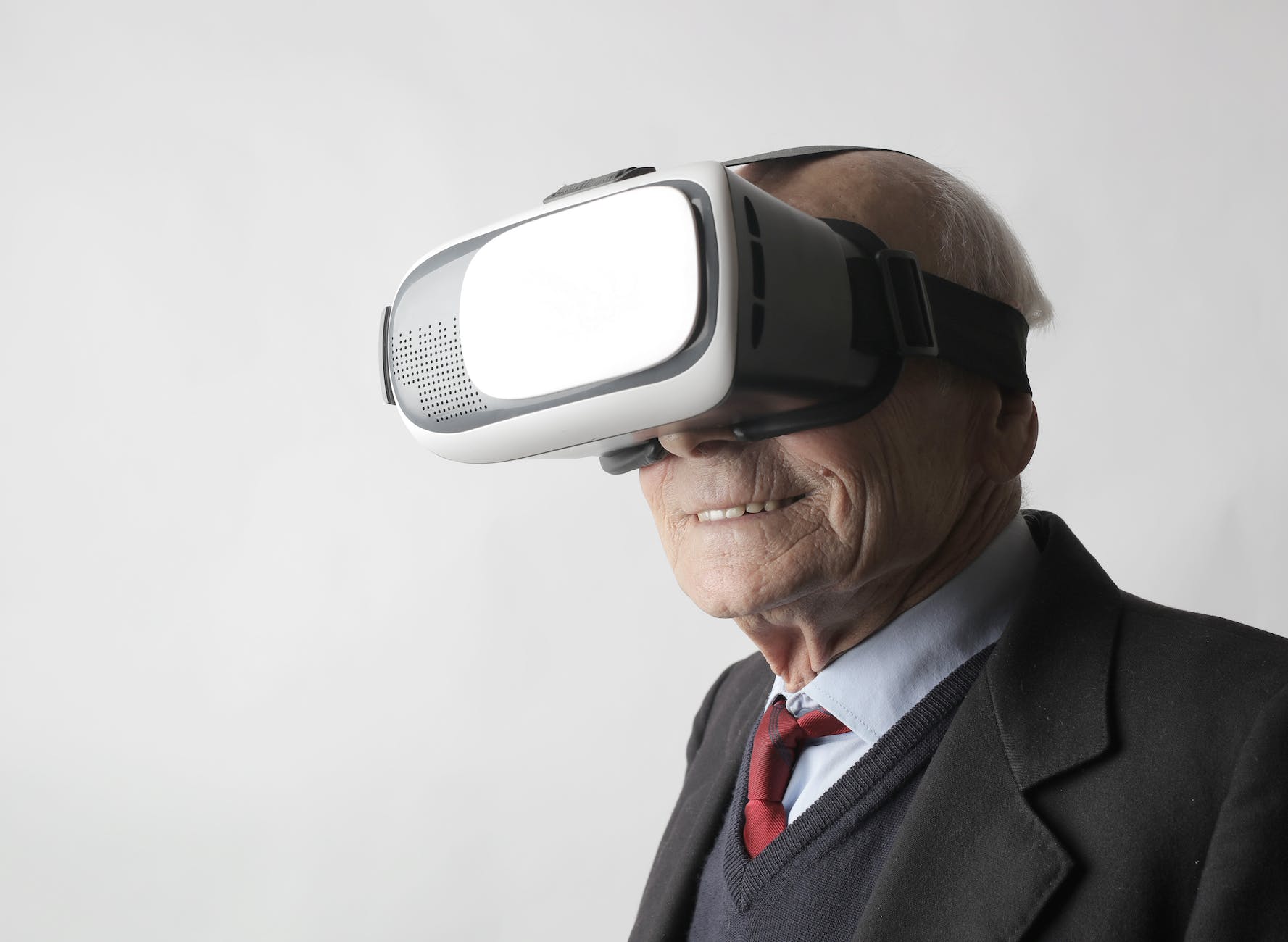
For now though, the future of virtual reality in healthcare seems very bright.
7 use cases for virtual reality technology in the pharmaceutical industry
Virtual reality technology is a very powerful tool for the pharmaceutical business. It helps engineers and technicians communicate complex information in a fully immersive and interactive virtual reality format.
1. Virtual reality product and device design review
Virtual reality allows you to display the 3D model of your pharmaceutical products at 1:1 scale, and interact with it in real time. This heightens understanding of how a device works, and you can make a design review with multiple stakeholders in the same VR room—even if you are miles apart in reality! Rather than carrying samples and prototypes around, all you need is a head-mounted display.
2. Virtual reality in pharmaceutical manufacturing
Pharmaceutical manufacturing requires a very high level of control from design to market. Most of the production relies on complex equipment that involves precise steps. VR enhances manufacturing processes by displaying and simulating the whole assembly process or any maintenance scenario you want to run. Virtual assembly is one of the biggest benefits VR brings to manufacturing.
3. Virtual reality for specialized technician training
It is crucial to familiarize yourself with pharmaceutical manufacturing equipment and medical devices before using them in real life. However, some of these machines are very expensive, and many scenarios can’t be tested with the real equipment. With a digital twin in VR of the machine, you can train technicians in VR simulations that would have been too dangerous or too rare to be done with traditional training methods.
4. A virtual reality platform for remote pharmaceutical operations
Global pharmaceutical companies have research facilities and production plants located all over the globe. Sometimes their experts and headquarters are (again) in another location. Thanks to cloud VR, all the stakeholders in a project can collaborate on the same CAD models, on a remote cloud-based platform. It’s an ideal solution for specialists in HQ to share their perspective in real-time with operations or maintenance staff, by taking notes on the digital mock-up and recording videos of their virtual sessions.
5. Virtual reality in pharmaceutical research and drug discovery
Virtual reality enables researchers to be fully immersed in their 3D models, and visualize complex three-dimensional data from within. It helps them understand and analyze how everything connects and interacts. For instance, VR is an ideal tool to discover new drugs and enhance preclinical research phases, such as drug-target interaction studies, and predicting the outcomes of a drug’s effect in the human body before clinical trials.
6. Virtual reality for ergonomics and operability on the floor plan of a hospital
When working on large-scale models, such as a hospital, a laboratory, or a factory, you can use VR to optimize the design-to-build process and improve ergonomics. For instance, when building a clinic, you need to take the line of sight of doctors and nurses into account, so they can easily check on their patients.
7. Virtual reality presentations for immersive pharmaceutical sales pitches
A huge obstacle to successful sales in the drug industry is competing for a professional’s time and attention. This is why a VR presentation is a great tool to communicate accurately, efficiently, and with lasting effect, compared to a traditional sales pitch. For example, you can create a fully immersive experience to visualize with precise details how new molecules will interact with one another.
What about augmented reality technologies in the pharmaceutical industry?
Augmented Reality is a technology that layers virtual data and the environment above the real world. AR positively influences the biopharmaceutical industry but has very different use cases than virtual reality. The difference is that AR is less immersive than VR, and sometimes all you need is your own smartphone instead of tethered VR headsets or an immersive room. The augmented reality experience also allows users to collaborate almost seamlessly in both worlds.
Here are a few examples of what augmented reality can bring to pharmaceuticals:
- Scan unlabeled drugs to identify them and avoid drug administration errors
- Visualize components and production processes to help improve drug sales and education
- Present complex data to an audience through an AR application

To keep up with market demands and the overall digitization of the pharmaceutical sector, successful drug companies recognize the need for smart and immersive technology. The use of AR and VR can be invaluable to many organizations and spans even more areas than the ones we covered in this article, such as patient treatment and education, behaviour study, surgical planning, etc. As Extended Reality continues to advance and turn out to be more affordable, we are likely to see even more significant innovations become commonplace in day-to-day activities across pharma in the near future.
 Convergence Between Pharmacy - Data Science and AI
Leave a comment