Most current vaccination systems utilize needles for immunization organization. With the increment in the quantity of vaccinations that youngsters all throughout the planet regularly get, wellbeing associations are starting to search for more secure choices that lessen the danger of cross-defilement that emerges from needle reuse.
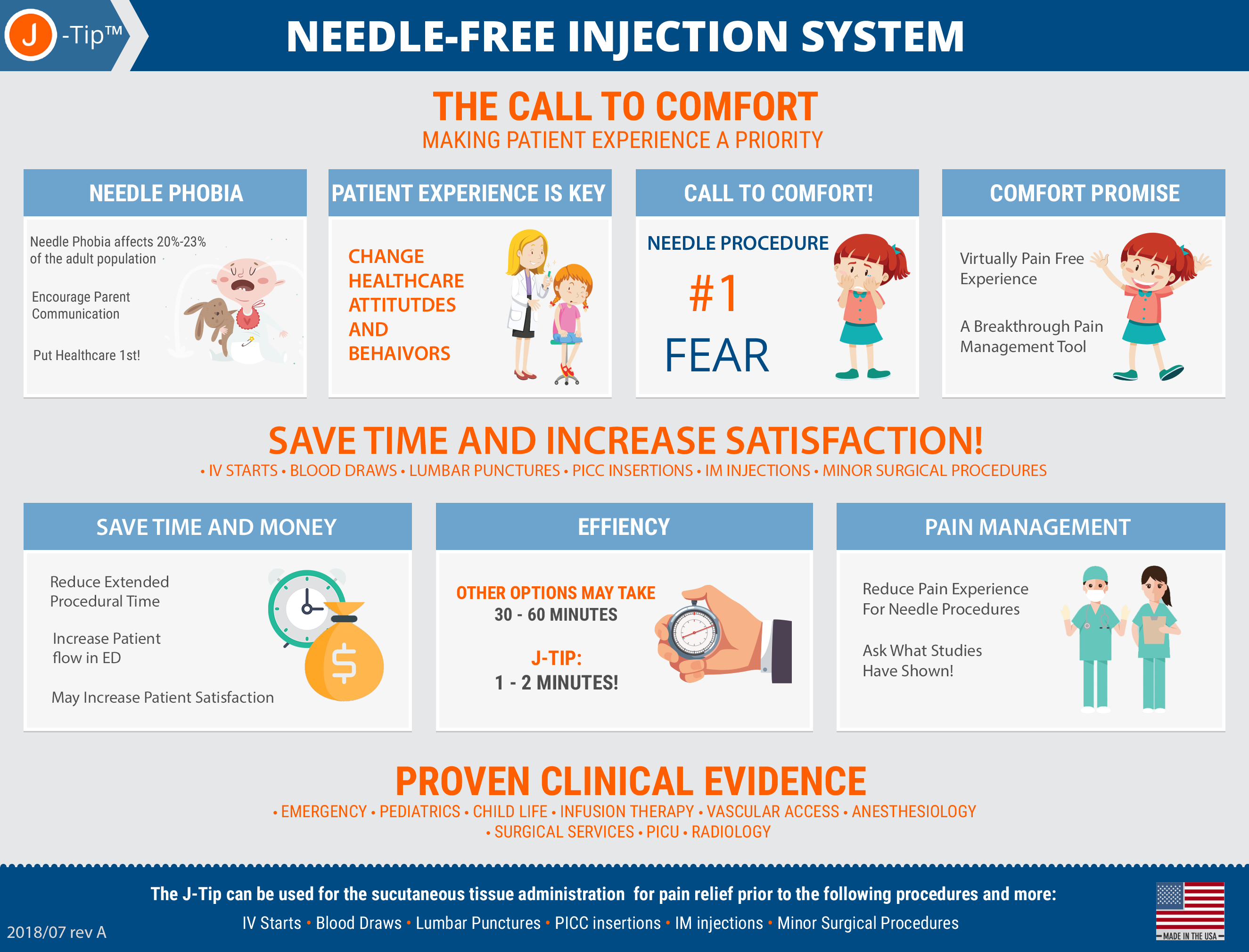
This Blog centers around contemporary advancements in without needle strategies for inoculation, like fluid stream injectors, effective application to the skin, oral pills and nasal showers.
Needles are the most usually utilized strategy for controlling immunizations and protein therapeutics, like insulin, to people. The World Health Organization (WHO; see the Online connections box) assesses those 12 billion infusions are given yearly, 5% of which are utilized for immunizations. Not withstanding their normal use, needle-based vaccinations have a few constraints. Needle fear is a significant issue for the grown-ups and children and makes immunizations stressful.

Furthermore, inadvertent needle sticks are a significant issue in both developed and developing nations. The Centers for Disease Control and Prevention (CDC; see National Immunization Program in the Online connections box), in the United States, appraises that in excess of 300,000 needle-stick wounds happen yearly in US hospitals. An expected accidental needle-stick wounds happen per 100 infusions around the world, representing an extensive danger to medical care providers.
A significantly more prominent deficiency of infusions is their ill-advised and dangerous use. This chiefly includes the reuse of needles, which is normal in agricultural nations for reasons of cost. The WHO has assessed that upwards of 33% of inoculation infusions are hazardous in four of its six geological regions.
Every year, an overpowering number of contaminations with HIV (80,000–160,000), hepatitis C infection (HCV; 2.3–4.7 million) and hepatitis B infection (HBV; 8–16 million) are thought to begin from the reuse of needles and needles by medical services provider. The WHO appraises that 32% of HBV contaminations, 40% of HCV diseases and 5% of HIV diseases in non-industrial nations are attribute-ready to perilous infusion practices. Of course, the improvement of sans needle inoculation methods has now been distinguished as a significant objective in worldwide wellbeing care.
Sans needle inoculations showed up just about 50 years prior with the oral polio immunization, which is as yet utilized in agricultural nations yet has been ceased in the United States since 2000.
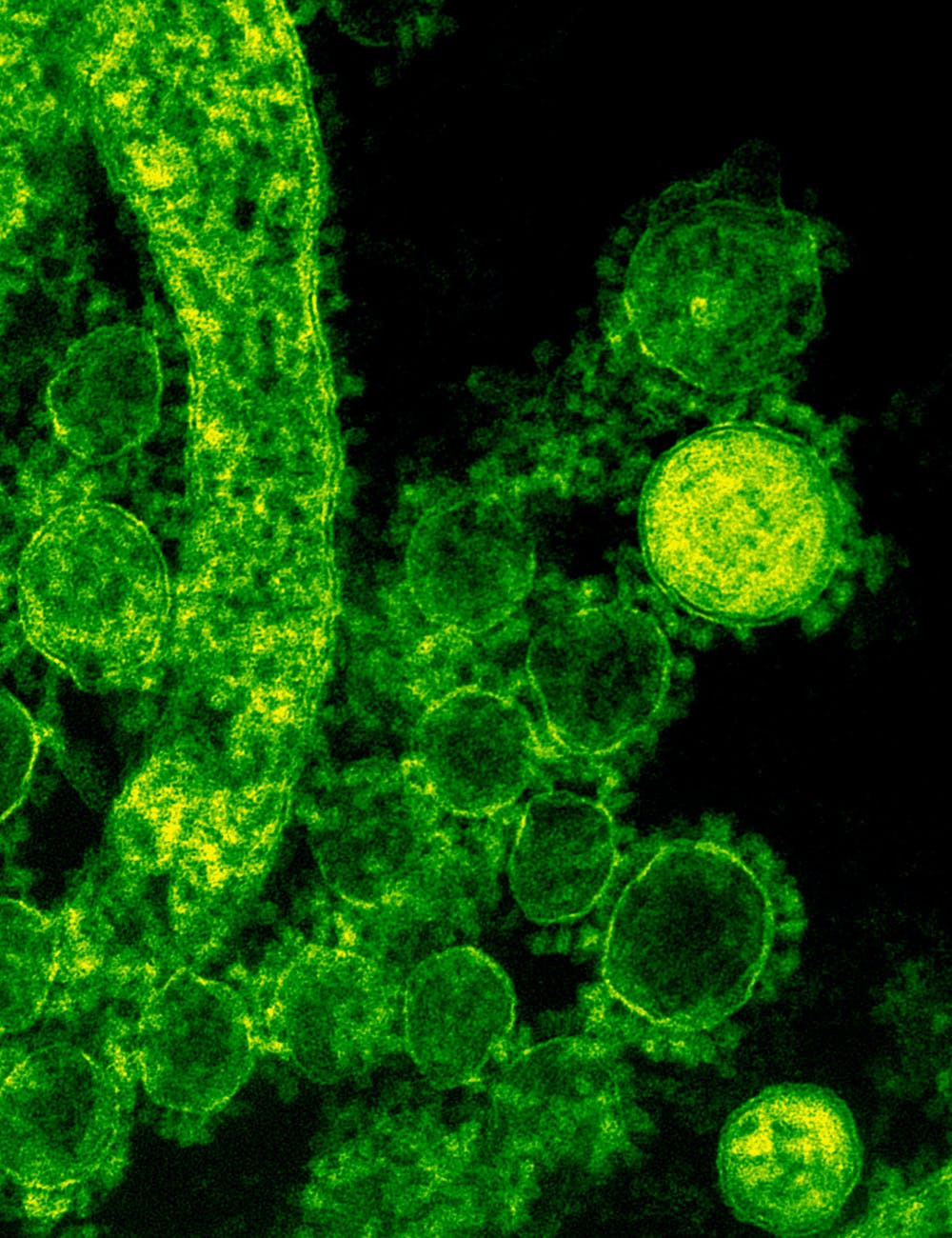
This immunization, which contains a LIVE ATTENUATED poliovirus, can contaminate the gastrointestinal lot and, hence, produce satisfactory invulnerable protection in the host. A few other without needle immunizations (oral typhoid fever, oral cholera, oral rotavirus and nasal flu), which additionally contain live weakened microbes, are currently accessible in any case, the organization of most immunizations without the utilization of needles has end up being testing, particularly for non-living antibodies (that is, killed microbes, and sub-unit, pathogen, peptide and DNA immunizations), which offer a few benefits.
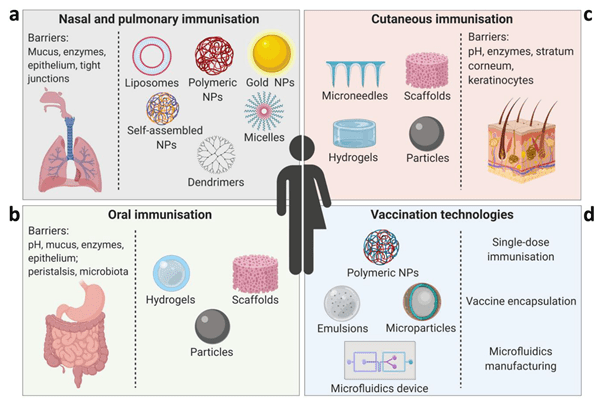
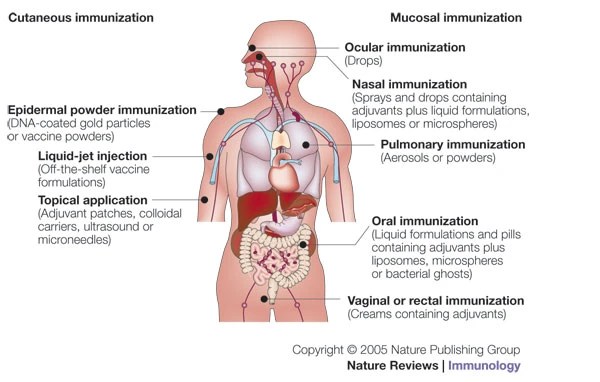
Therefore, in developed nations, just as non-industrial nations, most kid hood immunizations — including those against hepatitis B (a subunit antibody), diphtheria–lockjaw pertussis (pathogen and inactivated microscopic organisms), polio (killed infection), varicella (live weakened infection), measles–mumps–rubella (live lessened infection), tuberculosis (live constricted microorganisms) and yellow fever (live lessened infection) — are directed utilizing needles and needles. In the previous decade, notwithstanding, there has been a solid advance forward in tending to the innovative challenges that are related with inoculation without needles Current techniques for without needle vaccination, either monetarily accessible or being worked on, can be arranged into two wide classes — cutaneous inoculation and mucosal inoculation — depending on the site of antibody organization.
Cutaneous techniques for inoculation incorporate the accompanying: fluid fly infusion, which conveys a fast antibody stream into intradermal, subcutaneous or intramuscular areas; ballistic strategies (otherwise called epidermal powder vaccination), which speed up particulate immunization material and store it in the skin; and effective application techniques, which convey the antibody into or across the skin through uninvolved dispersion or worked with transdermal vehicle.
Mucosal vaccination strategies include conveyance of antibodies to a mucosal film, for example, the visual, oral, nasal, aspiratory, vaginal or rectal layer. This article gives an outline of the improvement of these techniques, with an accentuation on the difficulties that are related with the conveyance of non-living immunizations. Specific attention is paid to sans needle cutaneous vaccination. Point by point conversation of mucosal vaccination can be found somewhere else Fluid stream infusions.
Stream infusion is the most seasoned technique for needle free vaccination. The beginning of fly infusions can be followed to the last part of the 1800s, when a method known as aquapuncture was accounted for in the clinical literature. This gadget was utilized to convey planes of water and different fluids for applications other than inoculation: for instance, for the treatment of uncontrolled neuralgia.
Nonetheless, it was in the mid-1950s when stream infusions had their spot as a sans needle strategy for conveying drugs and vaccines.
A fluid stream injector utilizes the active energy of a high-speed immunization fly (normally in excess of 100 m for each second) with a distance across that reaches from 76 µm to 360 µm, which is more modest than the external breadth of a standard hypodermic needle (810 µm for a 21G needle). Fluid planes enter the skin and convey the antibody into the skin (that is, intradermally), the subcutaneous tissue or the muscle (intramuscularly).
Skin is a particularly alluring objective for antibody organization since it shapes a necessary piece of the invulnerable system. The epidermis is advanced with LANGERHANS CELLS, which structure an organization that permits them to take up antigen proficiently and subsequently to do safe surveillance.
The Langerhans-cell network is the following line of safeguard after the actual obstruction of the skin has been penetrated. Langerhans cells start explicit resistant reactions by preparing and introducing antigen pieces to gullible T cells in the lymph nodes. This advances the generation of both fundamental (IgG and IgM) and mucosal (IgA) humoral safe responses. Focusing on the immunization to the skin advances its contact with Langerhans cells and decreases the necessary portion of vaccine, a factor that would become critical during a period of antibody short-age, for example, the anticipated H5N1 flu infection skillet demic. Immunizations that are conveyed by fluid fly injectors commonly spread all through a bigger tissue volume after infusion than do antibodies that are directed with needles, which may permit them to build up better or quicker contact with antigen-introducing cells before they are debased.
Fluid stream infusions were first advocated by , multi-use-nozzle jet injector (MUNJIs), which permit infusion of a few portions utilizing a similar spout and antibody repository at a pace of up to 1,000 immunizations each hour. MUNJIs were effectively utilized for vaccinating people with live antibodies against measles and smallpox, just as non-living immunizations against cholera, hepatitis B, flu and polio.
Fluid stream injectors offer a few benefits notwithstanding stay away from the utilization of sharps. They have a long history of utilization, and they work with existing immunization details that have been produced for needle-based organization. In one model, they brought about higher SEROCONVERSION rates, however the explanations behind this are not clear. Simultaneously, fluid fly injectors have a few restrictions. In certain investigations, they were related with more elevated levels of agony than were needle-based injections, particularly when utilizing more established MUNJI gadgets. Fluid stream injectors have likewise been related with more-successive site reactions than have needles, like touchiness, redness and enlarging of the infusion site.
Molecule assault of the skin
Molecule based techniques (otherwise called ballistic methods) speed up powdered antibodies with the end goal that they penetrate the external layer of the skin (that is, the layer corneum) and are saved in the epidermis or the shallow layers of the dermis, a strategy known as epidermal powder injection (EPI). The ballistic method was first evolved in 1986, for the conveyance of DNA-covered metal particles of 1 µm in width into plants to hereditarily change them, and it was known as the quality firearm. In the mid-1990s, the ballistic strategy was formed into gadgets for conveying both ordinary and DNA antibodies to people.
Effective application to the skin
The skin has been utilized for regulating prescription to treat neighborhood conditions (for instance, irritation) for millennia. Foundational drug conveyance through the skin became noticeable with the presentation of transdermal scopolamine patches for treating movement ailment, in 1979. The utilization of the skin for the organization of immunizations has a much longer history. Vaccination against smallpox was drilled in India over 1,000 years prior by scratching dry scabs from smallpox injuries onto the skin of solid people. The skin stays the site for vaccination against smallpox in the advanced period, utilizing the bifurcated needle. Albeit the skin plays had a chronicled part in inoculation, the utilization of effective antibody application as an overall method of vaccination has as of late (during the 1990s) got consideration.
Actual techniques.
- Actual procedures that utilization microneedles, tape stripping, ultrasound, microoperation or electroporation have additionally been utilized to convey immunizations across the skin.
- The vast majority of these strategies, albeit very much read for general medication conveyance applications, have as of late arose as potential vaccination procedures. In the microoperation technique, a vaporization cycle (which includes centered testimony of nuclear power into the skin through an electrically warmed component) is utilized to eliminate little spaces of the layer corneum, subsequently uncovering the immunocompetent epidermis.
- In one investigation, in hair-less mice, utilization of an adenoviral vector to miniature prorated skin brought about 10–100-crease more prominent cell and humoral resistant reactions than did application to flawless skin.
- Microneedles (which are strong and empty varieties of micrometer-scale silicon projections) have likewise been utilized on a few events to do effective inoculation with different vaccines.
- Micro projection exhibits have been utilized to convey bare plasmid DNA, instigating more grounded and less vary-capable resistant reactions (as decided by serum IgG titers) than those initiated by needle-based infusions. They likewise diminished the quantity of inoculations that was needed for full seroconversion.
- In another examination, micro projection-exhibit patches were utilized to convey a model antigen, ovalbumin, to create a solid resistant response. Ovalbumin that was administered by micro projection exhibit produced an insusceptible reaction up to 50-overlay more noteworthy than that saw after a similar portion regulated subcutaneously or intramuscularly utilizing a needle.
Mucosal organization
Mucosal courses (particularly oral and nasal courses) have been utilized for conveying prescription for centuries, pre-dating needles and needles. A few centuries prior, nasal organization of dried scabs of smallpox injuries and oral organization of bugs from cows with cowpox were drilled in China as a method for inoculation against smallpox.
- It was the Sabin oral polio antibody, nonetheless, that carried mucosal inoculation to conspicuousness, in the mid-1960s, and that had an important job in the program for worldwide annihilation of polio. From that point forward, a few mucosal antibodies have been advertised. Since numerous microbes — for instance, HIV and flu infection — enter the body through mucosal tissues, the advancement of antibodies that offer mucosal insusceptibility has gotten extensive consideration in the previous 20 years.
Oral course
- Oral conveyance of antibodies is an alluring method of inoculation due to its adequacy and its simplicity of administration84. Orally conveyed antibodies, particularly particulates, are perceived by MICROFOLD CELLS (which test antigen) in the PEYER’S PATCHES of the digestive system and by dendritic cells that live there. As of now, barely any antibodies (those against polio, typhoid fever and cholera) are controlled orally, and the vast majority of these depend on live weakened microbes.
- Oral conveyance of non-living antibodies has end up being incredibly difficult, inferable from poor stability of proteins, peptides and DNA in the acidic and compound rich climate of the gastrointestinal tract. A few procedures, including the utilization of biodegradable polymeric particles and LIPOSOMES, have been taken on to ensure the antigens in the gastrointestinal parcel.
Nasal course.
- Intranasal conveyance of antibodies utilizing a nasal shower conveyed into the nostrils is an attractive method of vaccination. The nose, like the mouth, is a functional site for immunization organization, and nasopharynx-related lymphoid tissue efficiently actuates antigen-explicit safe reactions in both mucosal and fundamental invulnerable compartments.
Vaginal or rectal course.
- Vaginal and rectal immunization through skin utilization of a cream has as of late got consideration for vaccination against physically transferred infections like HIV/AIDS.
Different courses
- Extra mucosal courses, including aspiratory, visual and sublingual organization of immunizations, have additionally been endeavored in a few cases.
- Aerosolized immunizations have been conveyed through the aspiratory course, which plans to convey antibody at different levels of the bronchial tree, including the alveoli. Pneumonic conveyance of antibodies, which targets bronchus-related lymphoid tissue, has been successfully utilized for inoculation of people against measles, utilizing a live weakened virus.
Animal studies have likewise shown the adequacy of non-living aspiratory immunizations, including inactivated flu infection.

What do we conclude?
The weaknesses of infusions have prompted dynamic innovative work of without needle strategies for inoculation. The shift from needle-based to sans needle inoculation is additionally catalyzed, to some extent, by the acknowledgment that the skin and the mucosal films, which can’t be adequately gotten to by ordinary needles, are ideal focuses for immunization delivery. Up to this point, sans needle strategies for vaccination were limited to fluid fly infusion and oral conveyance of live weakened microbes. Impressive advances have been made in the previous decade, particularly in trans-dermal and nasal inoculation, however it ought to be noticed that the vast majority of the innovations that are talked about here are still at a beginning phase and need itemized assessment as far as security, harmfulness, reproducibility and financial attainability.
IN THE NEWS

In a meeting with NDTV, Dr NK Arora, who heads the National Expert Group on Vaccine Administration, said that immunization for kids in India will begin by September with the Zydus antibody made for 12 to long term old.
Taking note of that the immunization for kids is key for this age bunch as the Covid pandemic has been a major hindrance in the instruction of school-going youngsters, Dr Arora added that the crisis use authorization (EUA) for the Zydus antibody for youngsters is relied upon to draw near half a month.
This news will come as a help for stressed guardians in India who have been dreading the effect of a potential third COVID-19 wave on their youngsters.
Here are 8 realities that you need to think about the Zydus immunization for kids:
- 1. ZyCoV-D is a plasmid DNA immunization that creates the spike protein of the SARS-CoV-2 infection when infused. By doing this, it gets a safe reaction that assumes a vital part in shielding the human body from the illness just as viral leeway.
- 2. ZyCoV-D is a three-portion immunization controlled over a course of 56 days.
- 3. ZyCoV-D is managed without the utilization of needles. It is pushed only 1mm under the skin by means of without needle imported injectors — not at all like different antibodies that are delivered 1.5 inch deep into the muscles through needles.
- 4. The portion of ZyCoV-D is likewise lower (0.1 ml) contrasted with other COVID-19 antibodies dosages (0.5 ml).
- 5. To test the viability of its immunization against SARS Cov2 infection in kids, Ahmedabad-based Zydus Cadilla has been completing clinical preliminaries in more than 40 focuses including 1,000 kids.
- 6. As of now, Zydus Cadilla has a creation limit of 15 million portions each month and the organization are attempting to additionally grow the limit.
- 7. According to the organization’s assertion on the antibody preliminaries on youngsters, “the decency profile was like that found in the grown-up populace. Essential viability of 66.6% has been accomplished for suggestive RT-PCR positive cases in the meantime investigation”.
- 8. According to the organization’s assertion on the antibody preliminaries on kids, “no moderate instance of COVID-19 illness was seen in the immunization arm post organization of the third portion recommending 100% viability for moderate infection. No serious cases or passing’s because of COVID-19 happened in the antibody arm after organization of the second portion of the immunization”.
An EUA endorsement from the Drug Controller General of India (DGCI) will make ZyCoV-D the fifth COVID-19 antibody approved for use in India — the all-around supported COVID-19 immunizations incorporate those from AstraZeneca – Serum Institute of India, Bharat Biotech, Moderna and Russia’s Gamaleya Institute.

Dr Sharvil Patel, the Managing Director, Cadila Healthcare Ltd, said in a meeting to Live mint, “This advancement denotes a critical achievement in logical development and headway in innovation. As the world’s first since forever plasmid DNA immunization for human use, ZyCoV-D has demonstrated its security and viability profile in our battle against COVID-19. The immunization when supported will help grown-ups as well as young people in the 12 to 18 years age bunch.”
Intriguing, not many realize that Zydus was established by a previous pharma educator, Raman Bhai Patel, in a leased loft with a capital speculation of Rs 25,000. Peruse the intriguing establishing story of the multi-million pharma goliath here.





 Convergence Between Pharmacy - Data Science and AI
Leave a comment