

Reflecting this momentum, healthcare AI companies raised more than $2B in Q3’20, a new record for quarterly investment in the space. Companies are also raising large rounds as the space matures. A total of 11 healthcare AI companies closed $100M+ rounds since March 2020, mostly driven by interest in AI for drug R&D.
Some of the themes that have emerged during the pandemic will have a lasting impact on the healthcare industry. In this report, we look at 7 healthcare AI trends that have been accelerated by Covid-19 and dig into what comes next for the space.
Developments in previously disjointed fields such as artificial intelligence and machine learning, robotics, nanotechnology, 3D printing and genetics and biotechnology are all building on and amplifying one another . . . On average, by 2020, more than a third of the desired core skill sets of most occupations will be comprised of skills that are not yet considered crucial to the job today.
Faster, cheaper, better:
The next generation of MRI and CT scans
AI in radiology will not only drive down costs, but reduce the time patients spend at imaging centers and lower their exposure to radiation and heavy metals during the process.
One of the leading drivers of deals in healthcare AI is the use of computer vision in radiology to detect anomalies in medical scans and aid in disease diagnosis.
With big tech companies and numerous startups entering this space since 2014, the market is flooded with AI products for diagnostic radiology. Many of these players quickly repurposed their products to look for signs of Covid-19 in lung CT scans.
The impact of AI-assisted diagnosis on healthcare costs will become more pronounced in the coming months.
AI company Ezra, for example, wants to replace expensive and invasive prostate biopsy procedures for cancer detection in men with cheaper MRI options. Ezra claims its recently FDA-cleared AI software improves diagnostic accuracy over traditional prostate biopsies, while also making the procedure cost-competitive by introducing automation into radiologists’ workflows.
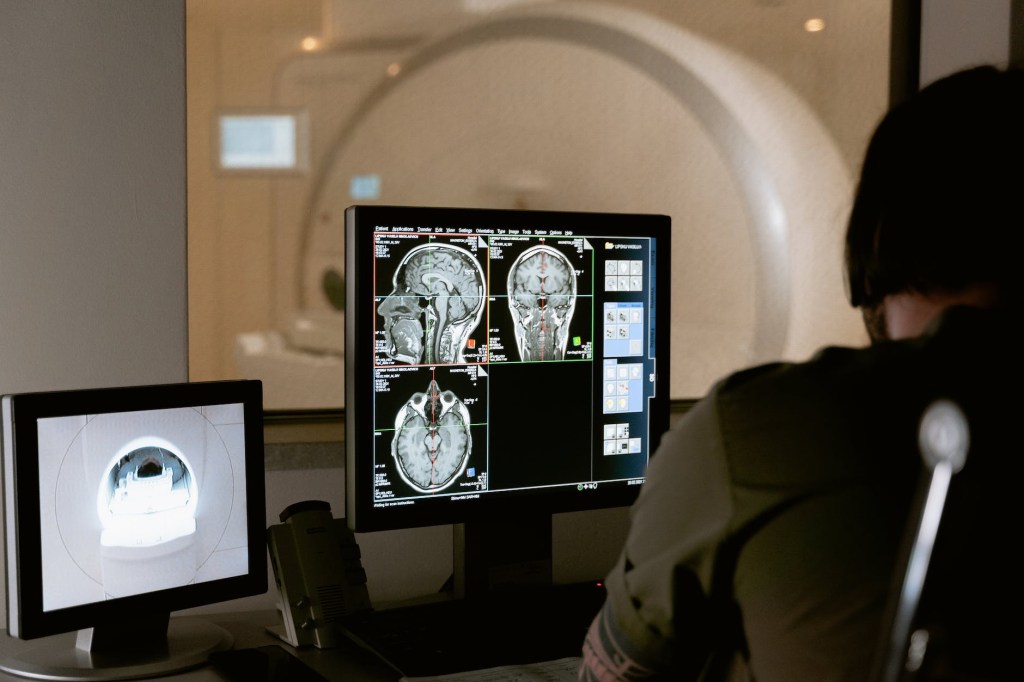
The average cost for a prostate biopsy is more than $2,000, according to research published in the Journal of Urology. Ezra is offering prostate MRIs directly to consumers for $575.
Apart from using AI, Ezra relies on a partner network to further cut costs for patients. It has partnered with RadNet — an outpatient MRI imaging service network with 290+ centers in the US — to book MRI slots in bulk.
The next wave of radiology AI applications are moving beyond disease diagnosis to image enhancement — the process by which the radiology scans are obtained in the first place.
AI algorithms are able to generate high-resolution CT or MRI scans with much less data than is required for conventional approaches. This means patients can be exposed to lower levels of radiation (in the case of X-ray/CT scans) or heavy metals like gadolinium (MRIs).
Instant blood and at-home rapid testing: AI will edge out labs for certain tests
Computer vision is turning smartphones into powerful diagnostic tools and reducing the need for expert interpretation of some test results.
Gauss Surgical, an AI company that hit the market with a blood loss monitoring platform for operating rooms, expanded its tech to consumer diagnostics during Covid-19.
Gauss partnered with biotech company Cellex to develop at- home Covid-19 rapid diagnostic kits. To conduct its antigen test, consumers are guided to apply a nasal swab using one of Cellex’s at-home test kits. Gauss’ AI app then prompts users to scan the test with their smartphones — neural networks process the image and display a result within seconds.
While a type of molecular testing called polymerase chain reaction (PCR) is considered more accurate for Covid-19 testing, the results can take up to a week to be delivered in some cases. Due to the demand for quick turnarounds amid the pandemic, the FDA has given emergency approval to companies like Cellex, which developed antibody tests that can be performed in as little as 15 minutes at labs.
Now companies like Gauss are leveraging computer vision to speed up diagnostics even more and pair them with patients’ smartphones.
In this vein, Healthy.io set out to make urine analysis “as easy as taking a selfie.” Its first product, Dip.io, uses the traditional urinalysis dipstick to monitor a range of urinary infections. Computer vision algorithms then analyze the test strips using a smartphone’s camera.
Healthy.io has since expanded its applications to prenatal testing and at-home chronic kidney disease testing.
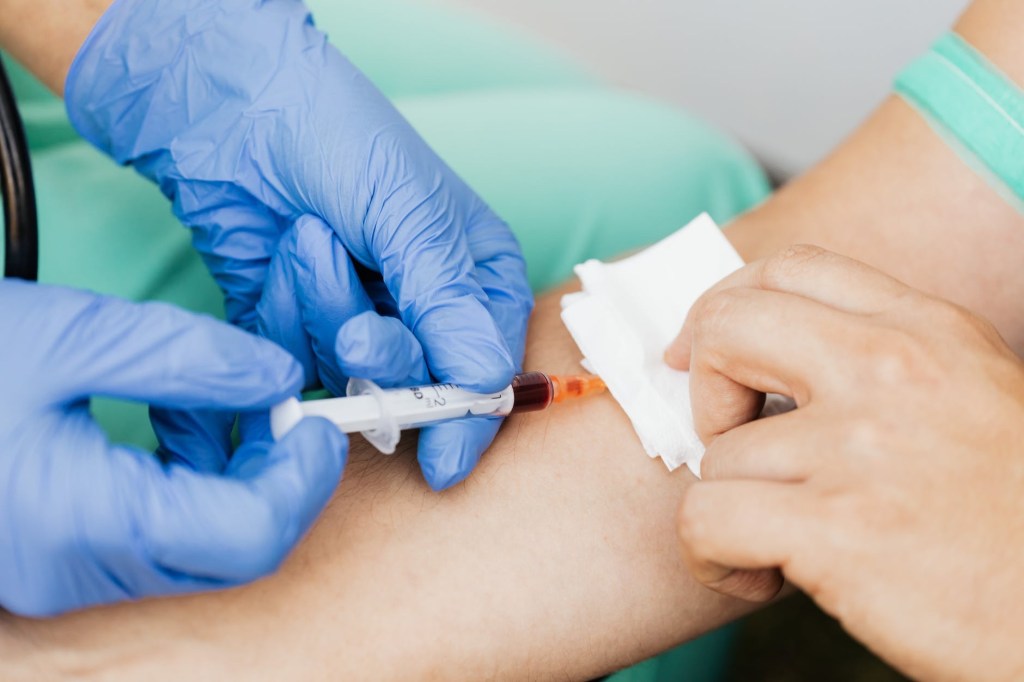
Beyond consumer tests, computer vision is enabling instant point- of-care diagnostics. For example, providers can use the tech to conduct some types of blood tests without the need for a third- party laboratory.
Sight Diagnostics, which raised $71M in fresh funding amid the pandemic, has developed a complete blood count (CBC) analyzer that can return results within minutes. The tech is awaiting FDA approval for point-of-care use in the US.
Telepathology: AI and digital slides will be a new normal for labs

A skills shortage coupled with social distancing measures is accelerating the adoption of digital pathology and AI.
Although not as rapid as the proliferation of AI in radiology, pathology AI has been gradually gaining traction — a pace that has quickened as more labs adopt digital technologies in response to the Covid-19 pandemic.
In traditional workflows, after a patient goes in for a lab test, the tissue or other biological sample is treated with a stain and sent to a pathologist, who then analyzes the sample under a microscope. If the pathologist is unable to form a conclusive diagnosis for a disease, the sample is packaged and shipped to another location for a second opinion.
The excerpt below from a Google AI blog post highlights the complexity involved in analyzing pathology slides and the chances of misdiagnosis.
“The reviewing of pathology slides is a very complex task, requiring years of training to gain the expertise and experience to do well. Even with this extensive training, there can be substantial variability in the diagnoses given by different pathologists for the same patient, which can lead to misdiagnoses. For example, agreement in diagnosis for some forms of breast cancer can be as low as 48%, and similarly low for prostate cancer.”
— MARTIN STUMPE AND LILY PENG, GOOGLE AI
AI will bring innovation and efficiency to early drug discovery
From understanding viral structures to homing in on promising compounds, AI can cut down pre-discovery times for new drugs from years to months.
Bringing a new drug to market can take a decade or more from initial research to distribution. But with governments scrambling for a vaccine for Covid-19, companies are looking at a multifold acceleration of this timeline.
Since the beginning of the pandemic, startups, universities, and big pharma have used AI to better understand the structure of the novel coronavirus, identify promising new compounds for treatment, find existing FDA-approved compounds that can be repurposed, and even design drug molecules that are structurally stable.
To study the structure of SARS-CoV-2, the virus that causes Covid-19, researchers at the University of Texas at Austin and the National Institute of Health (NIH) used software called cryoSPARC to create a 3D model of the virus from 2D images captured
using cryo-electron microscopy — a technique that can capture molecular structures.
The cryoSPARC software, developed by Structura Biotechnology, uses neural networks to tackle the problem of “particle picking,” or detecting and isolating protein structures in the microscopic images.
Google is also applying AI to drug discovery. Last year, its DeepMind subsidiary developed an algorithm, AlphaFold, to help understand protein folding — one of the most complex challenges in genomics — to better determine the 3D structure of proteins. During the pandemic, DeepMind used AlphaFold to predict protein structures associated with Covid-19 and publicly released this data.

Recursion Pharma has also released massive SARS-CoV-2- related datasets publicly. In September 2020, the AI-powered biotechnology company raised a $239M Series D round with participation from Leaps by Bayer, Lux Capital, Data Collective, and others.
Recursion has looked to use AI to better understand the virus. In a controlled environment, healthy cells were infected with the SARS- CoV-2 virus, and the microscopic images were analyzed using deep learning to identify the physical changes that occur in these cells as a result of the infection.
Meanwhile, Atomwise, an AI platform for small molecule drug R&D, partnered with Columbia University, Jazan University in Saudi Arabia, Dana-Farber Cancer Institute, and others to develop broad spectrum therapies for coronaviruses. Cyclica, an AI-supported drug discovery company, set up a joint venture with biotech company Mannin Research to discover small molecule drugs for infectious diseases, including Covid-19. Iktos, a France-based company, partnered with research firm SRI International to use Iktos’ AI platform to design novel molecules for therapies against influenza, SARS-CoV-2, and other viral diseases.
AI could help speed up drug discovery in the future. While progress in identifying drugs to combat the pandemic — of which there are 40+ vaccine candidates in human trials, according to the WHO
— cannot be directly attributed to AI, advanced computational modeling is becoming an increasingly indispensable part of the drug development process.
From nursing homes to quarantine wards, AI-driven passive monitoring takes off
Contactless, passive biometrics is reducing healthcare workers’ risk of exposure to the virus. The tech has potential to become mainstream beyond the current health crisis.
The advantage of passive monitoring, as opposed to data collected from wearables, is that it doesn’t require patients or seniors to actively wear a device all of the time.
Used in a hospital setting, the tech limits healthcare workers’ contact with Covid-19 patients, and thereby their risk of exposure to the virus, by automating data collection on vital signs.

A research team at MIT developed a device called Emerald that can be installed in hospital rooms. Emerald emits signals which are then analyzed using machine learning as they are reflected back.
The device differentiates between patients in a room by their movement patterns, can sense people through some walls, and is sensitive enough to capture subtle movements such as the rise and fall of a patient’s chest to analyze breathing patterns.
Federated learning: Hospitals, pharma partner for better AI
A privacy-preserving AI training approach that started with predictive text for Android keyboards is now accelerating AI adoption among pharma, hospitals, and others.
Federated learning, which enables increased data privacy while still allowing companies to take advantage of AI, was initially debuted by Google in Android keyboards to predict what a user will type next.
The capability to protect user data while improving AI algorithms makes federated learning a compelling option for industries dealing with sensitive information like healthcare.
Nvidia, in particular, has been an early adopter of the tech in healthcare.
The chipmaker introduced federated learning as part of its hardware and software healthcare framework, called Clara, with initial users of the tech including the American College of Radiology, MGH & BWH Center for Clinical Data Science, and UCLA Health.
Hospitals tap into AI, RPA for revenue cycle management
Healthcare has lagged behind other industries in implementing robotic process automation. But demand for the tech is rising during the pandemic.
Studies show that US hospital administrative costs exceed that of all other countries in the world, accounting for about 25% of total healthcare spend. Recent research has put this number at roughly $2,500 per patient.
Hospital administrative staff deal with revenue-generating functions like verifying a patient’s insurance eligibility, identifying the right medical codes based on the services provided, submitting claims to insurers, and following up with patients on outstanding bills, among other things.
Robotic process automation (RPA), an umbrella term for automating repetitive back-office tasks like onboarding and document digitization, has benefited from advances in computer vision and natural language processing. While mentions of
the tech on earnings calls hint that the initial hype might have plateaued, it is only now that more hospitals are weighing the benefits of using the tech for automation.
This could be attributed to the fact that the majority of RPA vendors today are general-purpose solution providers, catering to a wide range of industries. Few startups are specifically designing platforms that work seamlessly with the technical and regulatory bottlenecks unique to the healthcare sector.

Transforming Cancer Care in India with AI Innovations
Cancer remains a global health challenge, but exciting advancements in Artificial Intelligence (AI) are reshaping the landscape of cancer treatment. AI offers innovative solutions for personalized therapies, early detection, and cost-effective drug development, particularly benefiting underserved regions like India. The future holds great promise for accessible and effective cancer care.


AI-Driven Drug Design Inspired by Nature: Unlocking Biomimicry in Pharmacy
Nature, over billions of years, has mastered the art of survival, creating processes and structures that are both efficient and elegant. From the venom of snakes to the resilience of bacterial biofilms, nature has inspired some of the most groundbreaking scientific discoveries. Now, with artificial intelligence (AI), humanity is beginning to unlock the secrets of…

Regenerative Medicine: The Future of Sustainable Healthcare
The pharmaceutical industry is at a pivotal moment, and sustainability, green chemistry, and advancements in regenerative medicine are emerging as defining factors for its future. As climate concerns grow and demand for environmentally responsible practices intensifies, many pharmaceutical companies are exploring greener practices to minimize their ecological impact. Simultaneously, regenerative medicine and stem cell research…
 Convergence Between Pharmacy - Data Science and AI
Leave a comment