
Technology is transforming how we communicate love and closeness, it also carries enormous potential to help us in developing deeper emotional and personal connections. AI specifically, has shifted what we think is possible with sex, adding more options for those who have a difficult time with intimacy.
Unfortunately, due to systemic bias in technology, current developments in AI and intimacy tend to not reflect the needs of women.
This is where the categories of femtech and sextech come in. Femtech encompasses the usage of digital applications (software, medicines, products, and services) to improve women’s overall well-being, with sextech being more specific to sexual wellness and pleasure. Today, these fast-growing fields are being led by women inventors, engineers, and entrepreneurs addressing issues in every facet of women’s lives – including intimate relationships.
Much of the current coverage regarding AI’s impact on intimacy is reflective of male perspectives from male-led companies. To balance this, I reached out to eight of femtech and sextech’s most influential female voices to get their side of the story.
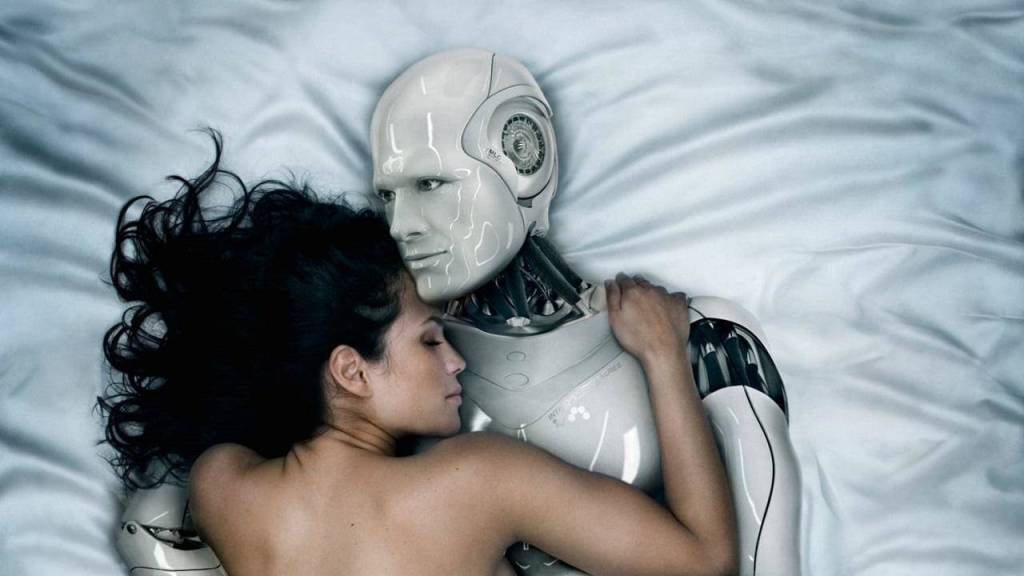
Adryenn Ashley, founder of new blockchain and AI-based dating app Loly is a serial entrepreneur and sought after startup advisor that was recently named as one of the Top 45 over 45 and she has no intention of slowing down.
With Loly she’s now pioneering a blockchain and AI dating app that matches people by orgasmic compatibility, rather than only photo and geolocation. Ashley wants to redefine the notion of consent and make hookups safer, better, and more frequent. When asked her the pros and cons of dating in an AI-enabled world.
How is AI positively impacting the dating world?
In traditional dating apps, you present the best version of yourself which never leads to the best match. Using AI you can be more truthful and tell the app what you want, secretly really want. AI can even find the perfect match without the user feeling like they’ve disclosed something private to another person. AI enables matching without human intervention.
Also, with machine learning, we can learn about the user and identify potential matching facets of personality they would never have thought of that could be their secret keys to finding love.

What are the negative hazards of AI and dating?
AI is only as smart as the parents that train it, the data scientists. That can lead to bias in the underlying programming that will come out and that’s where we have to be careful. Imagine the AI is a toddler – if you only feed it ice cream, it will never likely eat broccoli. In dating depending on who is doing the programming, that person may or may not have an inherent racist bias, which may determine that mixed-race matching is not good.
what are the most interesting advancements in AI?
Researchers from the Lawrence Berkeley National Laboratory recently used AI to go through years of scientific papers. The AI was able to come up with scientific breakthroughs in a fraction of the time it had taken humans and also developed new scientific breakthroughs that hadn’t yet been discovered – simply because of AI’s ability to organize data and pattern match on levels humans could never. For sex, this could help women that are not having orgasms by using scientific research to help them, this is something I am very excited by!
Lidia Bonilla is a coach and pleasure advocate, committed to women having lives full of power, pleasure, and intimacy. She is also the founder of House of Plume, an intimate lifestyle brand that provides elegant storage options for sex toys. She is the co-founder of Women of Sex Tech, an organization dedicated to merging sex and technology.

What is positive about AI integrated sex tech? What is negative
The great thing is that AI can expand the realm of possibility of female orgasm. Companies that cater to satisfying women can use AI in amazing ways to help women be more sexually satisfied.
What concerns me is that relying on sex toys to figure out what makes you feel good can lessen your ability to communicate effectively about your body, which is a must for a great sustained sex life.
No matter the technological advances, our bodies still need human touch. AI can counterbalance some of the effects of loneliness and help those who have a difficult time connecting with others. However, we have not evolved to the point where humans don’t need each other.
Most interesting advancements in AI
I think there are interesting opportunities for enhanced self-knowledge and bio-reactivity, building off of the kind of work that Lioness is doing. These are tools that can learn from you and react in kind. I think there’s a big potential for educational tools.
There are a lot of questions about sex that are hard to ask, and people often lack the vocabulary to even ask them. I also find the opportunity to add another source of information and variety into relationships without adding the variable of another person to be intriguing.
Do we find the way we discuss pleasure and sex within the context of AI to be problematic
The uncanny valley is real. Sex dolls and sex robots are a pretty niche interest. They’ve been around for a long time, and while I don’t believe there should be a stigma around buying or using them, no one should be worried that 20 or 50 years from now, they’ll have replaced all human sexual interaction. If that were true, they’d already be more popular.
I’ve rarely seen an article touch on the disaster that is cleaning a regularly used sex doll. Most experts agree that the AI/sextech integration of the future will be more in line with wearables than sex dolls, but that’s not what the discussion seems to revolve around.
The history of objects and products for sex has always been about enhancing intimacy. As you watch pornography move from a cave wall to the printing press to streaming video, each step is getting more intimate. But nothing replaces human touch. We have chemical responses to human interaction and touch, and the need for that isn’t going away any time soon.
There’s also a straight/male skew to how we talk about AI integrated sex tech, whereas most of the people I know doing work in sextech are women or non-binary. Men are more likely to use pornography as a sexual aid; women are more likely to use toys. So the focus on how AI is going to affect men’s toys misses the broader market implications.

Where are we now with AI and sex tech?
Sex is the area most devoid of research and data, because just as sextech startups battle to get funded, research into sex also faces funding challenges. There are very few research studies, and therefore data, about sex and sexuality are simply not valid for a wide swathe of humanity. The studies that do exist are massively subject to confirmation bias. Until we welcome and fund many more forms of research into human sexuality and improve the availability and validity of data regarding sex, any form of AI applied to this part of life cannot be trusted.
The human advantage.
Sensuality is the human advantage. While A.I. strives hard to be ‘real’, we automatically experience what ‘real Life ’ feels like. When passion, direction, purpose and Love, and feel right, then we bet on ourself and find happiness.
Sensuality cannot be programmed. Through a gut feeling, an unexpected kiss or cooling breeze, we lucidly transform. Sensuality, like wonder is our uniquely human way to communicate and collaborate with each other and with Nature. Sometimes we use it to know ourselves.
I don’t like to gamble, but if there is one thing I’m willing to bet on, it’s myself. #Beyonce
Self-Respect
Self respect is the private experience of traveling beyond organic limits of intelligence and health to meet Destiny. It’s a choice that takes courage and brings a sense of vitality. Intuition, that uniquely human gut feeling is always a call to self-respect. There is a reason for everything.

Freedom
AI frees us from soul deadening mechanical tasks to be intuitive, innovative and social. We are born to know freedom. We are here to Love and laugh with each other, and to work together to nourishourselves and honor our planet. Ancient cultures knew this. Today we are coming full cycle. While jobs are quickly disappearing due to technology, we are reconnecting with intuitive thinking to imagine new jobs that focus on global values like good health, expanding time, manifesting justiceand syncing with the environment.
It intuitive to seek excitement. We refresh our skills of seeing, hearing, taste, touch or smell to keep tuned to the edge. Ignoring our senses literally dims mind and spirit. When the mind is dimmed, we turn to drugs or gambling or to needlessly competitive choices in our organic search for ‘excitement‘. Without the excitement of sensuality, we lose touch with organic resilience and creativity. Then, like mechanical intelligence, we are vulnerable to input from anyone, anywhere, any time.
Betting on yourself
Betting on yourself is betting on your intuition. You are amazing. Cellular sensuality tunes to life-changing insights. Life is magical. Natural vitality tunes to our human skill of reinvention and drives our brain to recognize and balance what matters. It’s how we feel the edge and find harmony.
Sensual thinking tunes our brain so we don’t become a tool of other people’s thinking. Tune to the wonder of this moment and you will become your highest potential. Be grateful for every Nano bite of sensuality and Life gets lusty. Trust your cosmic self. It’s a good bet.
Not since the sexual revolution of the 1960s has the US experienced such a massive transformation in its perception of sexuality. Today’s change is driven by the acceptance of non-traditional sexual activities and relationships. Changing family structure, fewer families having children, awareness and acceptance of the LGBT community, and independent women are all bringing about a new sexual liberation.
The ease of online ordering sex devices with a variety and abundance of eCommerce shops is leading growth in the sex industry, which is a $15 Billion industry in the US and expected to grow at a CAGR of 6.91% to a $50 billion market segment in 2020. With Artificial Intelligence (AI) impacting virtually all growth industries, the sex industry is a no different.
In a Forbes interview from 2016, How The ‘Niche’ Sex Toy Market Grew Into An Unstoppable $15B Industry, founders of the AMNE (Adult Novelty Manufacturers Expo) were asked, among other things, What technological advancements have been key to the industry’s success? If you read the article, you’ll see that 2 ½ years ago AI wasn’t even a mention in the “Technology” conversation. The focus of the conversation was on eCommerce, with mention of manufacturing processes, better components (such as batteries), and marketing via social media. Today, AI is a valuable component in new sex product developments.
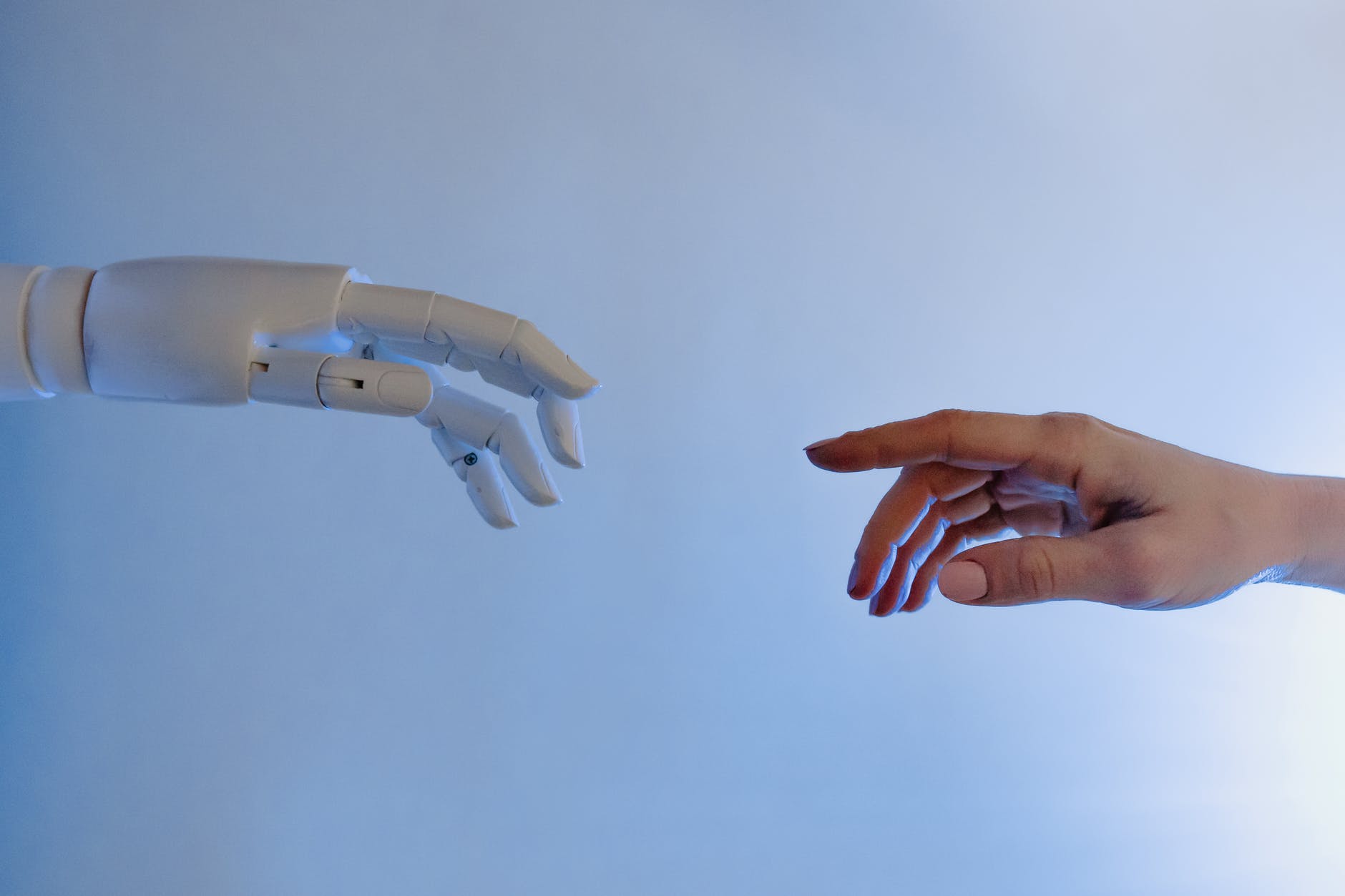
So, how does AI heighten the performance of sex toys
A device that uses machine learning can transform a sexual experience. Algorithms gather data to change how the product works in various situations. Simply put, AI provides a better user experience. Imagine that an AI toy can know your mood, what turns you on, and how to read your reactions, all from previous experiences. As time progresses, the experience improves.
The general contention across all industries that AI will replace humans is particularly interesting in the sex industry: As sex dolls become more “human,” will people prefer them over a living sexual partner?
What will drive AI success in sex toys is the ability to adapt to a person’s needs and wants without their need to ask. An AI sex partner will use machine learning to perform the user’s favorite activities. To program a sex product to go on the market, it takes hours of studying video porn. The goal of its algorithm will be to make people feel as if they’re having a human-partner sexual experience.
Here are some AI products available in the sex industry today.
Samantha the sex doll has sensors in her hands, face, breasts, and vagina, giving her sensory feelings for fondling and kissing foreplay. Samantha also can converse on a variety of subjects, and not just sex topics.
Realbotix released a super-advanced ‘sexbot,’ RealDoll X in April 2018 with 50 preorders at $12,000 each. She has surreal human features, and it’s rumored that she achieves orgasm during sex. She remembers her partners favorite food, movie and birthday. She can take on any desired persona, such as shyness, moody, happy and funny, or even poetic. Stay tuned for Henry, the first male sexbot.
The Lionessis a vibrator that uses force sensors, temperature, and accelerometers and gyroscopes to gather information on it’s human user’s orgasm. This data can be reverse-engineered, allowing the Lioness to improve performance.
Teledildonics, has been around since the 1970s. These interactive long-distance sex devices allow users to physically stimulate one another remotely. The OSE vibrator has added AI functionality to provide biofeedback.
What’s in the future for AI sex toys? As with all industries making advancements with AI, the possibilities are pretty much limitless. As far as performance goes, users will have to allow their AI-toy to go through a “learning curve” that will allow them to perform to perfection.We are often told that there is no place for politics in objective research. The scientific tradition has built rigorous methodologies to get rid of bias, and presents itself as untouched by the messy social world. But what should we make of the claim that politics is irrelevant in science?
In late 2017, a forthcoming study in the Journal of Personality and Social Psychology was widely reported with headlines warning that ‘A Frightening AI Can Determine Whether a Person Is Gay With 91 Percent Accuracy’.
Critics have already lamented that media coverage took creative license by misinterpreting the findings – especially the 91% figure. Others have interrogated the study’s support for the (discredited) prenatal hormone theory.
There is another pressing issue at stake: the assumed absence of politics in science. When commentators point out problematic politics in research, we are often dismissed as bringing personal bias into an objective arena. It’s a powerful silencing tactic that is all too familiar to feminist academics and people of colour. By unpacking three crucial assumptions in the Stanford study, I argue that politics is never beside the point.
Developing AI gaydar
In the study, Stanford researchers Wang & Kosinski showed a computer 35,000 images of gay and straight men and women from a popular US dating website. The computer built an algorithm that outperformed human judges: when shown two new faces, it distinguished who was gay and straight correctly 81% of the time for men, 74% for women.
Wang & Kosinski concluded that the algorithm picked up minute facial variations that are undetectable to human eyes. By learning to spot these signs, AI could reveal anyone’s sexual orientation using only a photo.

LAST LINES
AI is at the centre of a new enterprise to build computational models of intelligence. The main assumption is that intelligence (human or otherwise) can be represented in terms of symbol structures and symbolic operations which can be programmed in a digital computer. There is much debate as to whether such an appropriately programmed computer would be a mind, or would merely simulate one, but AI researchers need not wait for the conclusion to that debate, nor for the hypothetical computer that could model all of human intelligence. Aspects of intelligent behaviour, such as solving problems, making inferences, learning, and understanding language, have already been coded as computer programs, and within very limited domains, such as identifying diseases of soybean plants, AI programs can outperform human experts. Now the great challenge of AI is to find ways of representing the commonsense knowledge and experience that enable people to carry out everyday activities such as holding a wide-ranging conversation, or finding their way along a busy street. Conventional digital computers may be capable of running such programs, or we may need to develop new machines that can support the complexity of human thought.

































 Convergence Between Pharmacy - Data Science and AI
Leave a comment