
Neuroscience and artificial intelligence (AI) are two very different scientific disciplines. Neuroscience traces back to ancient civilizations, and AI is a decidedly modern phenomenon. Neuroscience branches from biology, whereas AI branches from computer science. At a cursory glance, it would seem that a branch of science of living systems would have little in common with one that springs from inanimate machines wholly created by humans. Yet discoveries in one field may result in breakthroughs in the other— the two fields share a significant problem, and future opportunities.

The origins of modern neuroscience is rooted in ancient human civilizations. One of the first descriptions of the brain’s structure and neurosurgery can be traced back to 3000 – 2500 B.C. largely due to the efforts of the American Egyptologist Edwin Smith. In 1862 Smith purchased an ancient scroll in Luxor, Egypt. In 1930 James H. Breasted translated the Egyptian scroll due to a 1906 request from the New York Historical Society via Edwin Smith’s daughter. The Edwin Smith Surgical Papyrus is an Egyptian neuroscience handbook circa 1700 B.C. that summarizes a 3000 – 2500 B.C ancient Egyptian treatise describing the brain’s external surfaces, cerebrospinal fluid, intracranial pulsations, the meninges, the cranial sutures, surgical stitching, brain injuries, and more.
In contrast, the roots of artificial intelligence sit squarely in the middle of the twentieth century. American computer scientist John McCarthy is credited with creating the term “artificial intelligence” in a 1955 written proposal for a summer research project that he co-authored with Marvin L. Minsky, Nathaniel Rochester, and Claude E. Shannon. The field of artificial intelligence was subsequently launched at a 1956 conference held at Dartmouth College.
The history of artificial intelligence is a modern one. In 1969 Marvin Minsky and Seymour Papert published a research paper titled “Perceptrons: an introduction to computational geometry” that hypothesized the possibility of a powerful artificial learning technique for more than two artificial neural layers. During the 1970s and 1980s, AI machine learning was in relative dormancy. In 1986 Geoffrey Hinton, David E. Rumelhart, and Ronald J. Williams published “Learning representations by back-propagating errors” which illustrated how deep neural networks consisting of more than two layers could be trained via backpropagation.
During the 1980s to early 2000s, the graphics processing unit (GPU) have evolved from gaming purpose towards general computing, enabling parallel processing for faster computing. In 1990s, the internet spawned entire new industries such as cloud-computing based Software-as-a-Service (SaaS). These trends enabled faster, cheaper, and more powerful computing. In 2000s, big data sets emerged along with the rise and proliferation of internet-based social media sites. Training deep learning requires data sets, and the emergence of big data accelerated machine learning. In 2012, a major milestone in AI deep learning was achieved when Geoffrey Hinton, Alex Krizhevsky, and Ilya Sutskever trained a deep convolutional neural network with 60 million parameters, 650,000 neurons, and five convolutional layers, to classify 1.2 million high-resolution images into 1,000 different classes. The team made AI history by through their demonstration of backpropagation on a GPU implementation on such an impressive scale of complexity. Since then, there has been a worldwide gold rush to deploy state-of-the-art deep learning techniques across nearly all industries and sectors.

In the future, the opportunities that neuroscience and AI offer are significant. Global spending on cognitive and AI systems is expected to reach $57.6 billion by 2025 according to IDC estimates. The current AI renaissance, largely due to deep learning, is a global movement with worldwide investment from corporations, universities, and governments. The global neuroscience market is projected to reach $30.8 billion by 2025, according to figures from Grand View Research. Venture capitalists, angel investors, and pharmaceutical companies are making significant investments in neuroscience startups.
Today’s wellspring of the global commercial, financial and geopolitical investments in artificial intelligence owes, in some part, to the human brain. Deep learning, a subset of AI machine learning, pays homage to the biological brain structure. Deep neural networks (DNNs) consist of two or more “neural” processing layers with artificial neurons (nodes). A DNN will have an input layer, an output layer, and many layers in between—the more artificial neural layers, the deeper the network.
The human brain and its associated functions are complex. Neuroscientists do not know many of the exact mechanisms of how the human brain works. For example, scientists do not know the neurological mechanisms of exactly how general anesthesia works on the brain, or why we sleep or dream.
Similarly, computer scientists do not know exactly how deep learning arrives at its conclusions due to complexity. An artificial neural network may have billions or more parameters based on the intricate connections between the nodes—the exact path is a black-box.
This black-box problem can be disconcerting considering AI’s growing impact on the future of the global economy. By 2030, artificial intelligence is projected to generate USD 13 trillion additional economic activity globally according to a 2018 report by McKinsey Global Institute.
So how can scientists better understand the inner workings of deep learning? One approach is to deploy concepts from human psychology–the scientific study of the mind and behavior.
Gary Marcus is a psychology and neural science professor at New York University, and former CEO and Founder of Geometric Intelligence that was acquired by Uber. In an article on Medium in 2018, Marcus suggests that the AI community should consider “incorporating more innate structure into AI system.” He calls for hybrid models that would “incorporate not just supervised forms of deep learning, but also other techniques as well, such as symbol-manipulation, and unsupervised learning.”
Google’s DeepMind is using principles from cognitive psychology to understand deep neural networks in order to address the black-box problem. Cognitive psychology is the scientific study of mental processes such as thinking, problem solving, perception, memory, applied language, attention and creativity.
As Demis Hassabis, co-founder and CEO of DeepMind, explained in an article that he wrote in The Financial Times in April 2017, “As we discover more about the learning process itself and compare it to the human brain, we could one day attain a better understanding of what makes us unique, including shedding light on such enduring mysteries of the mind as dreaming, creativity and perhaps one day even consciousness.”

Fortunately, innovation in neuroscience may serve as inspiration for future advancements in artificial intelligence, and vice versa. For example, deep learning’s architecture is a hierarchical computing system. But what if the human brain’s neurological process for learning is non-hierarchical?
In 2018 scientist and technologist Jeff Hawkins of Numenta introduced a new framework that goes against decades of commonly held views in neuroscience on how the human neocortex operates —the “Thousand Brains Theory of Intelligence.” Hawkins hypothesize that that every part of the human neocortex learns complete models of objects and concepts by combining input with a grid cell-derived location, then integrating over movements. Due to the non-hierarchical connections, inference may occur with movement of the sensors.
It would be interesting to apply the Thousand Brains Theory of Intelligence to develop new types of artificial intelligence. Can a novel form of machine learning genre be developed with non-hierarchical connections that connect between artificial processing systems—across modalities and levels?
The underlying mechanisms of AI deep learning and human cognition are complex systems. Ironically, humans have created artificial intelligence with inherent opacity like the biological brain. Together, both fields of science are producing breakthroughs that may significantly shape the future of humanity.
Romanticizing AI & Neuroscience
How they both inspire and benefit each other to advance for a happy human life after.

With so much at stake, the need for the field of neuroscience and AI to come together is now more urgent than ever before.
DeepMind
How neuroscience inspires AI
Neuroscience has played a key role in the history of artificial intelligence. It has been an inspiration for building human-like AI. There are two ways that neuroscience inspires us to design AI systems. One, that emulates human intelligence, and two, to build neural networks that mimic brain structure.
AI systems that emulate human intelligence.
Recent artificial intelligence advancements are taking the media by storm by performing impressive feats such as:
- reliable object recognition that such as Tesla’s self-driving cars
- playing video games to outperform the best StarCraft players
- detecting breast cancer faster and better than doctors
These machines can perform tasks and solve problems better than us, achieving performance that rivals or even exceeds human capability. However impressive these may seem to be, they are only designed to excel in their intended functions. We are still decades away from building artificial human intelligence.
Despite their biological inspiration and performance achievements, these artificial intelligence systems differ from human intelligence in crucial ways. For a machine to learn or think like a person, it would need to be able to:
- explain and understand problems
- learning-to-learn for acquiring knowledge
- generalise knowledge to new tasks and situations
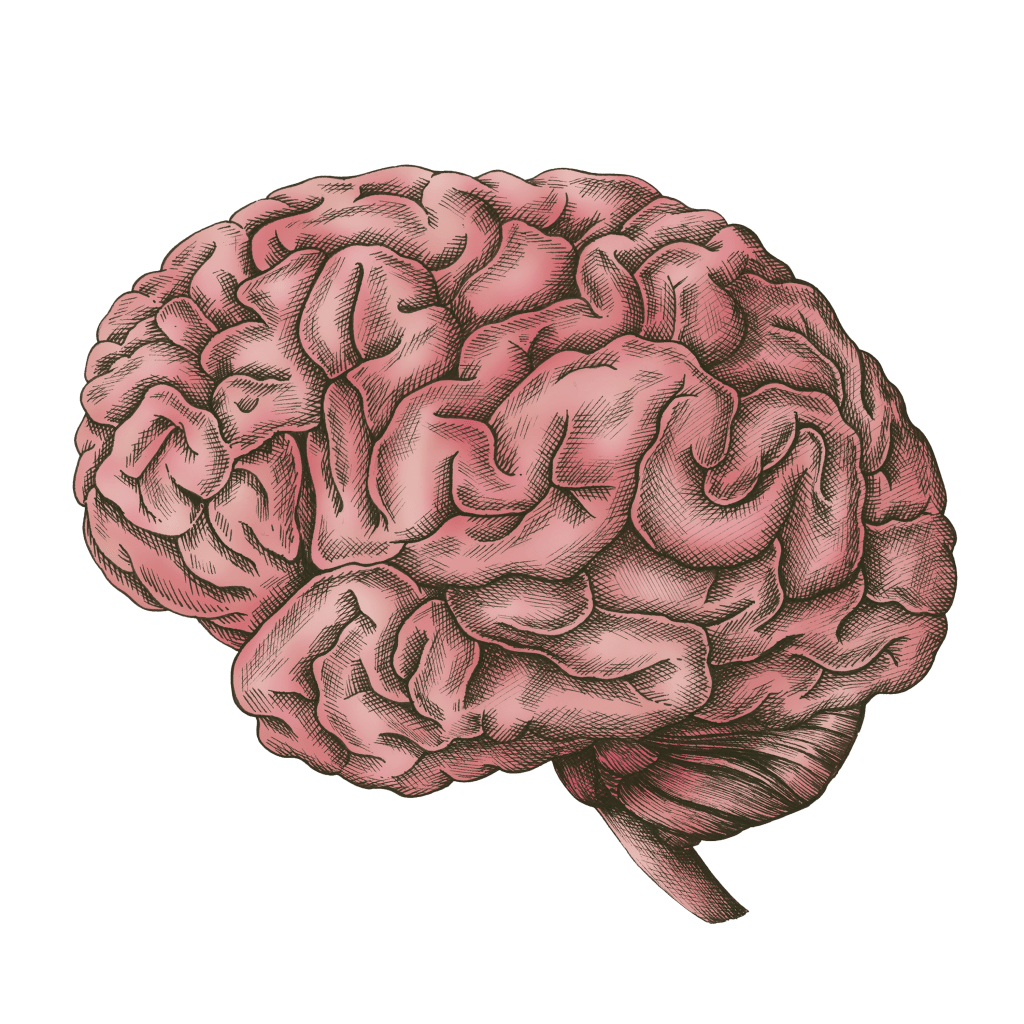
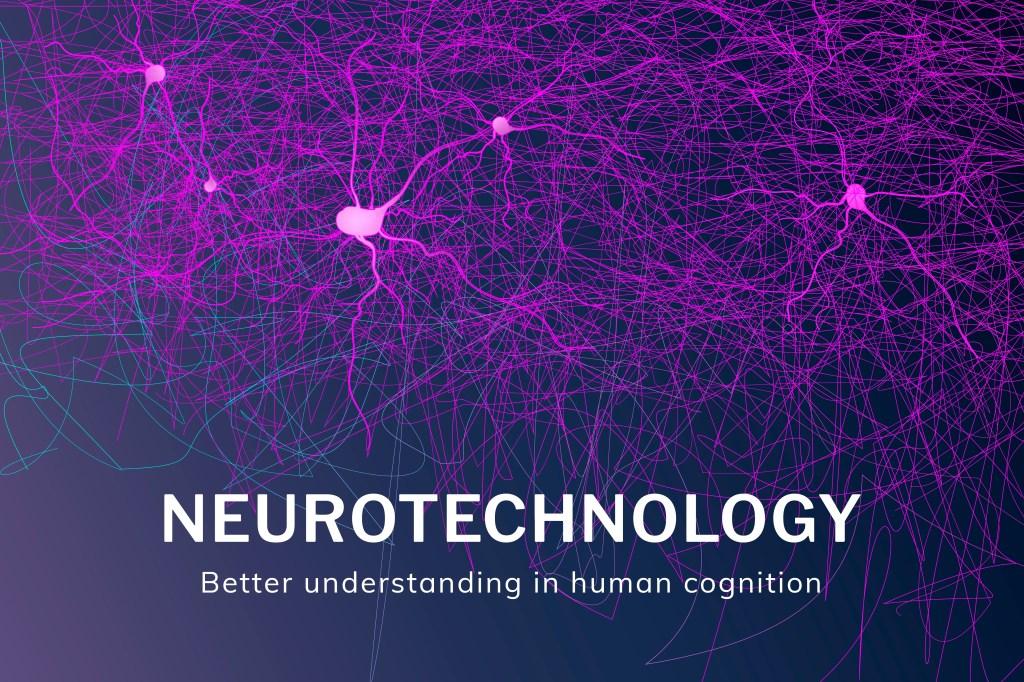
A human brain contains about 86 billion neurons, each individually linked to other neurons. Biological neurons are cells: when one gets activated, it generates a spike and sends signals to other neurons.
Like a human brain, the machine learning neural network also consists of interconnected neurons. When a neuron receives inputs, it gets activated and it sends information to other neurons.
How AI advances neuroscience
Artificial intelligence is rapidly becoming an invaluable tool in neuroscience. It helps us to understand how the human brain works and to accelerate neuroscience development.
AI helps us to understand how our brain works.
Neuroscientists are researching how the human brain processes thoughts and how it moves our bodies. By knowing more about the brain, we are equipped to better diagnose mental diseases and enable people with disabilities to improve movement capabilities.
The advancement of artificial intelligence systems can help drive neuroscience forward and unlock the secrets of the brain. It allows neuroscientists and researchers to build better models to simulate the human brain.
Neural networks are acting as “virtual brains” that capture the representation of our brain. These virtual brains can produce patterns of neural activities that resemble the patterns recorded from the brain. These patterns allow neuroscientists to test hypotheses and observe the results from simulations before investing more resources for actual testing on animals and humans.
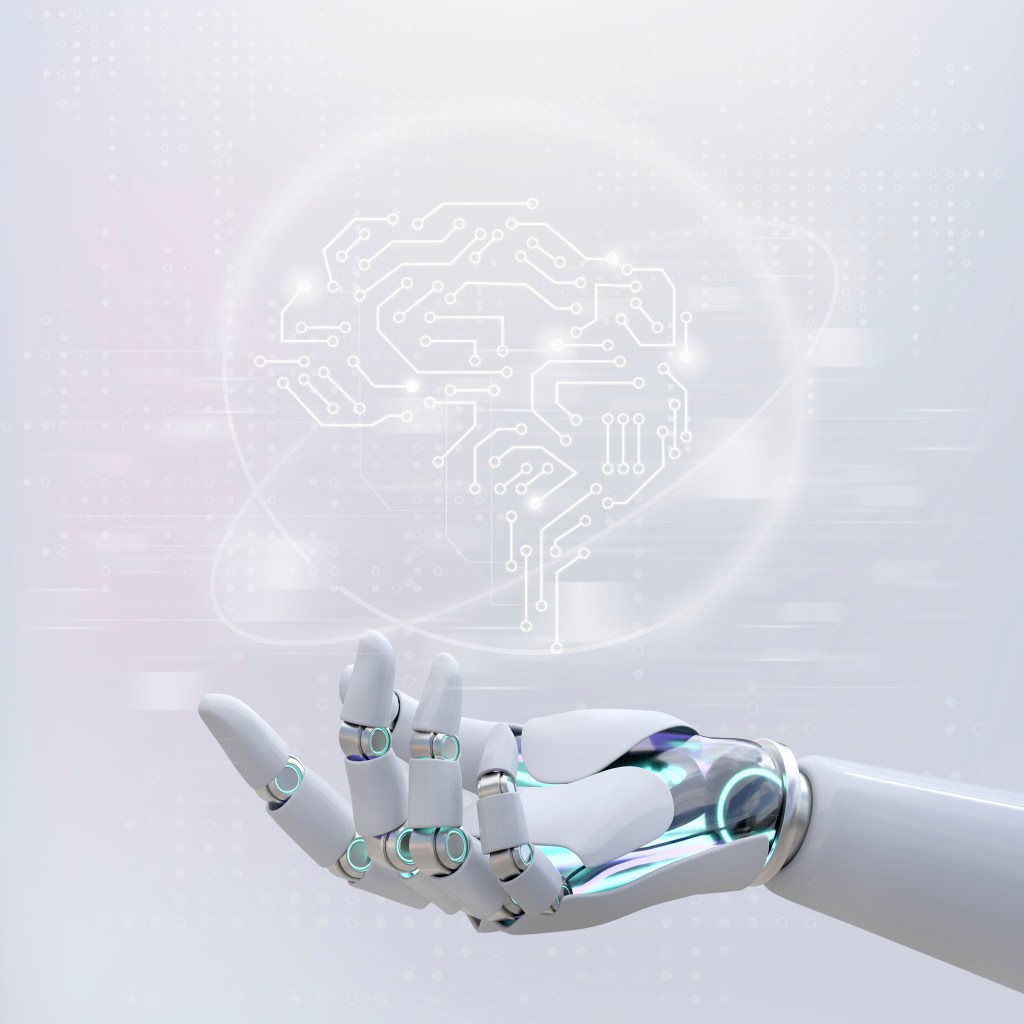
AI accelerates neuroscience development and discoveries.
Machine learning’s main strength lies in the ability to recognise patterns in complex data. Complexity is especially true when it comes to analysing our human minds. The signals from the brain are really complicated. With the advancement of machine learning, neuroscientists are cracking the secrets of how billions of brain neurons work together.
Neuroscience and artificial intelligence

The human brain is the paramount inspiration for building human-like artificial intelligence. AI researchers use ideas from neuroscience to build new algorithms.
On the flip side, artificial intelligence accelerates research in neuroscience. Neuroscientists learn from the behaviour of artificial agents to interpret our brains.
Naturally, these two disciplines fit together and will continue to build on each other’s insights.
I’m optimistic about the future of this partnership between neuroscience and artificial intelligence.
Elon Musk on AI & Neuroscience
Elon Musk is perhaps the closest to being a real-world Tony Stark — science, gadgets and rockets — Musk has the most futuristic tech empire. But unlike Stark, Musk has been vocal about criticising AI and has been embroiled in a series of controversies (most notably the Twitter jibes) as well.
In fact, his most recent remarks centered around autonomous machines being more dangerous to the world than North Korea and could unleash “weapons of terror”. He had related adopting AI to “summoning the devil”. Musk had also warned that AI could trigger the next World War and argued that super-intelligent robots could dominate the world. In the documentary titled Do you Trust This Computer, Musk warned that supercomputers could become “immortal dictators from which we would never escape.”
Closing Thoughts
We can never be certain about how humanity would end up in the future. We live in a world of unlimited possibilities of unlimited imaginations. Only time will tell us whether AI would ever be capable of dominating human beings. As for now, we will let the creative minds of the world enlighten us with possibilities and probabilities of a future that is yet to come.
If you think about it, both AI and neuroscience deal with the same thing. Experts in both fields intend to constantly discover the depths and myriad capabilities of the human brain. There are several aspects of AI and neuroscience that overlap with each other. While they exist to serve different end purposes, it is not a stretch to say that AI and neuroscience are closely linked. In fact, the learnings from neuroscience act as cornerstones for data experts while building AI-powered systems.




 Convergence Between Pharmacy - Data Science and AI
Leave a comment