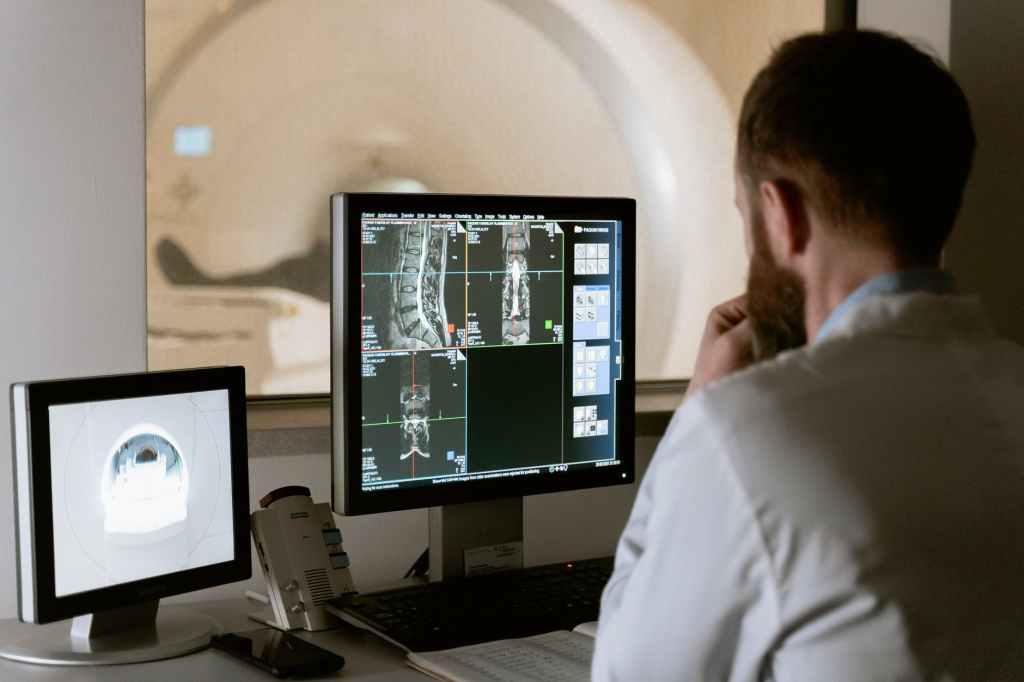

Artificial Intelligence (AI) in gastroenterology has the potential to democratize access to knowledge that has historically been held in the hands of specialists.
For example, the expert scoring of endoscopic findings in inflammatory bowel disease can now be done automatically, and the results placed in the hands of primary care physicians, nurses, and even patients. Some of the most recent developments in AI for gastroenterology have been in the area of polyp detection, but that is just the tip of the iceberg. Exciting new developments also include automated documentation, automated trial recruitment, and many other advances. AI in gastroenterology is still a nascent field, dependent very much on physician input to ensure development targets clinical needs. It is essential that this input includes primary care physicians, and as continue to partner with providers in developing these powerful tools can streamline care while producing better outcomes.
Defining parameters
AI technology augments physician expertise and optimizes the ability to deliver patient care. For example, it can serve as a second set of eyes for polyp detection and identification, enhancing the quality of patient care through improving detection of adenomatous polyps. Or, in inflammatory bowel disease (IBD), it can aid in diagnosis and determine severity of disease.
In some applications, AI also serves as an extra hand for EHR documentation with tools that automatically learn and adapt based on the data entered, improving clinical efficiency and accelerating workflows. In doing so, AI can reduce physician burnout, redundant data entry, and the likelihood of missed information through human error.
Physicians and AI developers must work together.
In clinical trials today, are using AI to expedite the qualification of patients by automatically determining severity of disease. This qualification incorporates both endoscopic interpretation and analysis of EHR data to match patients precisely to trials. This enhances both the ability of patients to access drugs which would otherwise be unknown to them, and also accelerates new therapies into the market for the general population.

Collaborating with Primary Care
Physicians and AI developers must work together to advance GI care–it won’t happen without active participation from both parties. Leading AI developers like Iterative Scopes need clinicians to offer their expertise and guidance to ensure new technology meets clinical needs. Meanwhile physicians can lean on AI developers to design solutions to help them not only keep pace but advance the standard of medical practice. Clinician guidance is critical in development of these tools, and in recognition of this Iterative Scopes will continue to ensure that the clinical perspective is a core input to all of our development processes.
AI should be part of all care plans, starting from the primary care physician’s office all the way to the gastroenterologist. In order to achieve maximum impact, AI development roadmaps need to be built on a foundational understanding of the needs from the very beginning of the patient’s continuum of care. believe that with the right tools will be able to help all providers practice at the top of their license.
Because incorporated provider feedback in our clinical development cycles, Iterative Scopes focused early product development on two main pain points, both related to interpreting endoscopic tissue. The first is reducing variability in identifying polyps. Through conversations with providers specific design decisions are made both around algorithm development and the software user interface. These include, for example, emphasizing the importance of identifying sessile serrated lesions which can be particularly difficult to recognize. are currently tackling the problem of consistent scoring of severity of disease for IBD patients and have demonstrated successful capabilities in distinguishing mild, moderate and severe disease. These products can reduce the disparity in outcomes that see in medicine today thereby reducing both patient and physician anxiety.
Machine learning
Machine learning is an application of artificial intelligence that enables software to learn and adapt using algorithms and statistical models, rather than by following explicit instructions. Machine learning applications analyse data patterns, draw inferences and adjust accordingly. One example of a machine learning application that is being used in GI today is Provation Apex Procedure Documentation, which uses machine learning to personalize and streamline the documentation process for physicians.
The future of AI in gastroenterology is very exciting. Advances are coming almost faster than the industry is able to keep pace with. As moving forward here are some of the areas to follow:
Integrated AI-powered clinical decision support and documentation software
Today, AI-augmented polyp detection is typically positioned as an add-on service, either provided by an endoscope vendor or as an attachment that integrates to the endoscopic processor. propose to take this integration one step further and to not only introduce AI po red polyp detection software that interfaces with the endoscope but also integrates into documentation platforms. An AI software that integrates into documentation platforms could not only detect polyps in real-time, but could also reduce the burden of documentation by capturing information about polyp type, size and location as discrete data points for physician review and sign-off. Other easily captured data points could include cecal intubation, withdrawal time, total procedure time, types of tools used to resect polyps and other findings as they relate to quality of procedure, like automatic assessment of bowel prep quality. This is just one example of the kind of function computer-vision and AI can provide to improve and streamline documentation for physicians. This also serves as an example of the kind of product development that can be delivered when incorporating provider feedback and priorities.
Providers should start asking patients if they would like AI to be a part of their care plan.

More dynamic machine learning
As mentioned earlier, the current state of machine learning in GI documentation allows a software to learn and suggest common selections. In the near future, machine learning will increase in capacity and be able to recommend full templates based on what the physician has documented in the past. AI will not only provide documentation suggestions, but also clinical decision support (i.e., identifying contradictory indications, suggested medications, and alerts), allowing nurses and physicians to continue to be extremely thorough while also increasing efficiency in their patient charting and procedure documentation.
A look at the future
AI in GI is already delivering better patient outcomes. AI can provide enhanced data but will never replace the art of medicine, or the ability gained through generations of experience and scientific discoveries to manage the diagnosis, prognosis, prevention, and treatment of injuries and diseases.
As more specialists and primary care providers become involved in collaborating with AI experts, more impactful AI technology will be designed to achieve the best patient outcomes. AI is already accelerating and improving care, as well as forging valuable new industry partnerships, and look forward to what the coming years will bring.
Gastroenterology is a field that AI can make a significant impact. This is because diagnosis of gastrointestinal conditions relies much on image-based investigations (endoscopy and radiology). Taking digestive tract cancer as an example, AI-assisted image analysis aids the detection of gastrointestinal neoplasia during endoscopy, provides optical biopsy to determine the nature of lesions, integrates genomic and epigenetic data to provide new classification of cancers, and provides evidence-based suggestions for optimal therapies. Furthermore, AI assisted surgical operations, through semi-automated and automated robotic surgery, will obviate some part of surgical procedures to be performed by surgeons.
AI-assisted endoscopy
AI has been proved to work well in assisting endoscopic examination of the gut with high sensitivity and specificity in detecting lesions such as polyps, bleeding, and inflammatory lesions. Machines make less intra- and interobserver variations and do not suffer from fatigue during visual examination, and their results often out-perform those of human endoscopists. AI-assisted colonoscopy has already been used in clinical practice to identify and characterize polyps.
Furthermore, AI can assist in interpreting the image of polyps identified during endoscopy and can determine whether they are adenomatous or hyperplastic. Misawa et al. found that AI-assisted optical biopsy using the EndoBRAIN system can characterize polyps found with high accuracy by applying indigo carmine dye spray on the lesions and adding magnification to the endoscopic image If matching-assisted optical biopsy is found to be reliable, this technology will not only improve adenoma detection in colonoscopy but also reduces unnecessary polypectomy of lesions with no malignant potential, saving tremendous labor and cost. AI-assisted endoscopy has extended beyond detecting and characterizing colonic polyps. Using deep CNN, AI has been used to detect premalignant changes in the stomach and detect early gastric cancer, a diagnostic challenge that is even difficult for experienced endoscopists.
AI-assisted capsule endoscopy
Wireless capsule endoscopy (WCE) is a ground-breaking advancement allowing painless examination of the gut. WCE reaches the small intestine where conventional endoscopy is difficult. However, the reading of the WCE images is extremely time consuming, rendering the biggest obstacle in the use of this technology. Aoki et al. trained a deep CNN system based on Single Shot MultiBox Detector using thousands of WCE

AI-assisted prediction of clinical outcome
AI has another major potential in healthcare: to predict the clinical outcome of patients on the basis of clinical data set, genomic information, and medical images. Cardiologists have developed algorithms to assess the risk of cardiovascular disease and claimed that their prediction is superior to existing scoring systems. Hepatologists claim that one can predict which individual has developed non-alcoholic steatohepatitis (NASH) by using large data set from representative population. Bandaria et al. used a large electronic medical record data set that include extensive clinical claims data on patients seen in a variety of provider practice types across the United States They used a combination of sophisticated AI algorithms to characterize the likelihood that a patient who is not an ICD10 identified NASH is having such condition. The results seem remarkable.
Gastrointestinal bleeding still constitutes one of the most common emergencies in hospitals that requires early endoscopy.
AI and robotics may be developed beyond human control
Traditionally, the attending clinician is the primary defendant in a clinical negligence or malpractice lawsuit. Up to now, AI-assisted image analysis and machinelearning neural network in diagnosis and prediction of disease progress merely offer an “opinion,” facilitating decision-making in clinical management. The clinician still has full discretion on accepting or rejecting these diagnoses and opinions. Similarly, to date, endoscopic or surgical robots only perform relatively simple procedures and possess little autonomy and decision-making authority in an operation. The endoscopist or surgeon still has full control over the operation and is able to take over the operation from AI-assisted endoscopes or robots. Insofar as the decision-making process still rests upon the attending clinician, existing laws (common law tort of negligence, contract, and relevant legislative provisions) are adequate and sufficient to protect those who suffer from adverse outcomes. However, scientists and engineers are making significant advancement in AI-assisted procedures: from no-autonomy robot assistant to task autonomy or conditional autonomy and, eventually, full automation. Self-learning machines will be able to directly process unpredictable and independent tasks. There may be circumstances where human clinicians are unable to control or override these procedures made by AI devices.

This technological shift will soon compel us to reconsider aspects of clinical liability in the event of inaccurate or delayed diagnosis. Neither the AI developer nor the attending clinician may be able to fully understand how the machine comes up with the diagnosis or prognosis decisions. On the other hand, following gradual stepping up of machine automation in endoscopy, interventional radiology, or surgical operations and correspondingly declining control of the endoscopist/radiologist/surgeon, the current legal position, whereby the clinician is primarily liable for inaccurate or delayed diagnosis or treatment caused by malfunctions of AI software, becomes more strained. However, legal academics and lawmakers have not reached common consensus on the allocation and scope of liability — between clinicians, healthcare organizations, and AI developers.
AI will make a paradigm shift in medicine. This technological advancement is expanding rapidly in gastroenterology and gastrointestinal surgery. Researchers should continue to work on new AI technology and human–machine interface to improve diagnostic and prognostic accuracy. However, we should aim at developing AI-assisted medicine, instead of AI-driven medicine.





























 Convergence Between Pharmacy - Data Science and AI
Leave a comment